Winter feeders / Roundup
The Best Tube Bird Feeders for Winter
The tube is the feeder everyone owns and nobody chooses. Four published specifications separate one that works through a northern winter from one you stop filling in February.
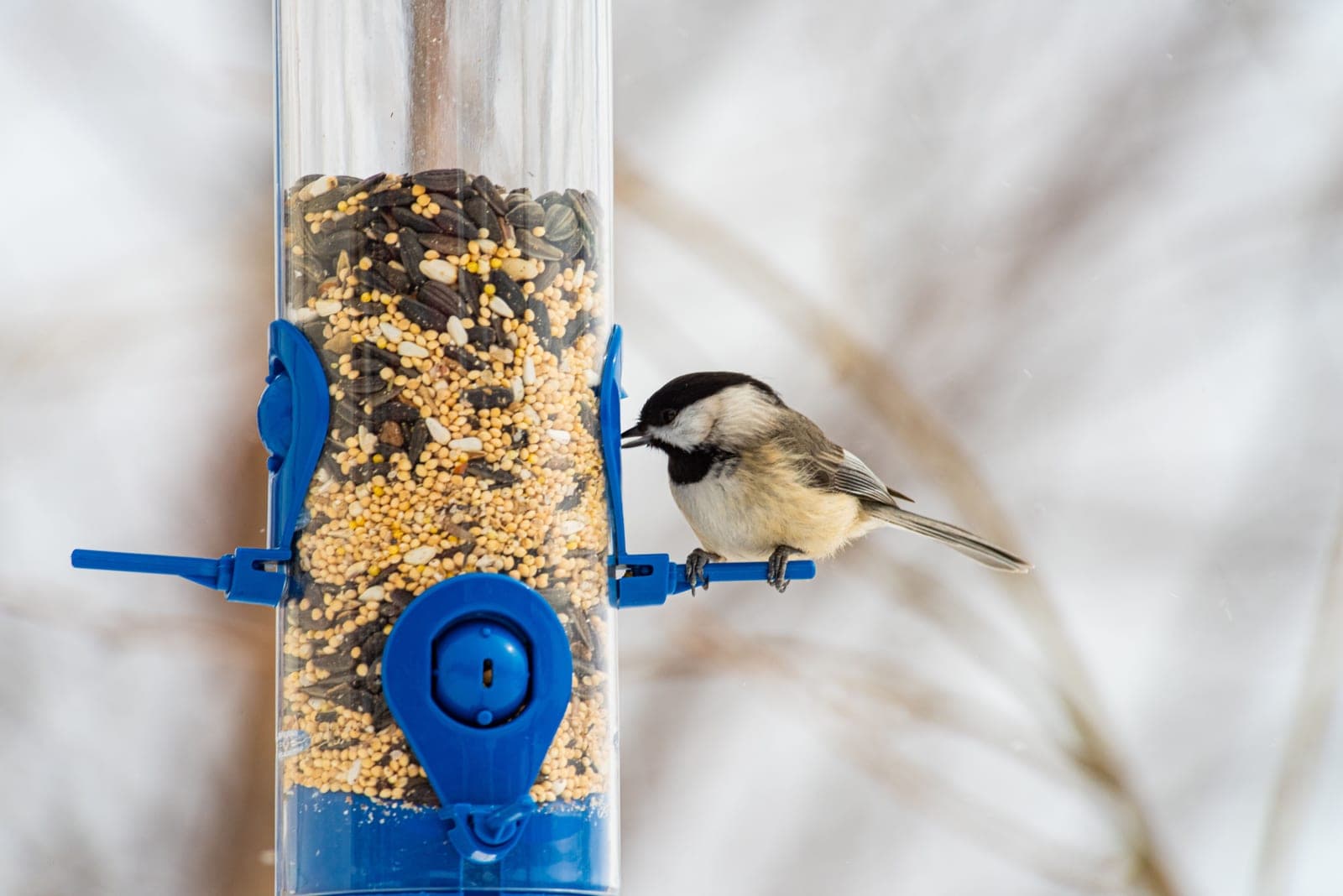
Four published specifications decide a winter tube feeder: how much seed it holds, whether the base comes off without tools, whether the ports are metal, and whether water has anywhere to go. The More Birds Jumbo wins on capacity at 3.1 lb; the Aspects 394 wins on cleaning.
Winter Perch is funded by affiliate commission. If you buy through a link on this page we may earn a commission at no extra cost to you, and it never decides a ranking. Full disclosure · how we pick.
Quick picks
Ranked, with the trade-off named. Tap a row for the full write-up; the price button goes straight to Amazon.
| # | Product | Best for | Price |
|---|---|---|---|
| 1 |  More Birds Jumbo Seed Tube Feeder, 3.1 lbThree pounds of seed and six ports for about the price of a bag of sunflower — this is the one that buys you a week between refills. | Capacity per dollar | $14.98 · See it on Amazon |
| 2 |  Aspects 394 Quick-Clean Seed Tube Feeder, Small, 10"The base pops off by pressing two buttons, which is the difference between cleaning a wet tube in January and deciding to do it in April. | Emptying and scrubbing damp seed without tools | $39.24 · See it on Amazon |
| 3 | 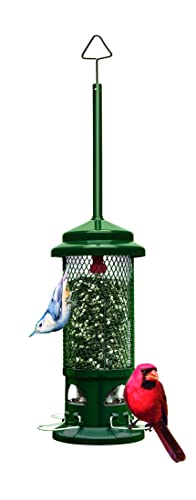 Brome Squirrel Buster StandardThe weight-activated shroud is the only mechanism on this page that genuinely closes a squirrel out, and the vented tube is a real answer to seed going damp. | A tube that survives squirrels | $58.37 · See it on Amazon |
| 4 |  Woodlink NACOP Audubon Copper Tube Feeder with Tray, 16.5"The tray at the base is the reason to buy this one: it catches the seed the ports throw and gives the ground feeders somewhere to stand while they eat it. | A tube that catches its own spill | $41.19 · See it on Amazon |
| 5 |  Kingsyard 15" Metal Tube Feeder, 6 PortsAn all-metal body and ports for under twenty dollars, with one real catch: the perch is sized for small birds and is meant to turn larger ones away. | Metal ports at a plastic-tube price | $18.89 · See it on Amazon |
#ad how we are funded · price as of October 6, 2026
The picks in full
Top pick Capacity per dollar
More Birds Jumbo Seed Tube Feeder, 3.1 lb
Three pounds of seed and six ports for about the price of a bag of sunflower — this is the one that buys you a week between refills.
Specifications
- Seed capacity
- Up to 3.1 lb
- Feeding ports
- 6, with U-shaped perches
- Dimensions
- 4.6"L x 4.2"W x 18.4"H
- Material
- Polycarbonate
- Mount
- Built-in pole socket and metal hanger
- Cleaning
- Open tube design, stated to disassemble for cleaning
- Model
- 65040 (Woodstream)
Trade-offs
- 3.1 lb is roughly four times the Aspects, and the single most useful winter number on this page
- Six ports means six birds, which matters in the first hour after dawn
- The built-in pole socket means no separate hanging hardware if you already run a pole
- Cheap enough that replacing it in three years is not a real cost
- Plastic ports and perches — this is the design squirrels chew through
- No roof or weather guard, so wind-driven rain goes straight down the ports
- The jewel-tone plastic is the least handsome thing on this page
- No published warranty figure we could find
Who it is forThe reader who took this site's capacity argument seriously and wants the cheapest honest way to act on it.
Skip it ifSkip it if squirrels already own your yard. Plastic ports on an unbaffled pole is a feeder with a service life measured in weeks.
#ad how we are funded · price as of October 6, 2026
Where these specs came from
- More Birds Jumbo Bird Feeder, open tube design, built-in pole socket, holds up to 3.1 lb — manufacturer listing, Amazon.com (retrieved 2026-10-06)
- Plant Addicts — More Birds Jumbo Seed Feeder: 3.1 lb capacity, six feeding ports with U-shaped perches, 4.6"L x 4.2"W x 18.4"H, built-in pole socket and metal hanger
No. 2 Emptying and scrubbing damp seed without tools
Aspects 394 Quick-Clean Seed Tube Feeder, Small, 10"
The base pops off by pressing two buttons, which is the difference between cleaning a wet tube in January and deciding to do it in April.
Specifications
- Seed capacity
- 3/4 quart
- Feeding ports
- 2
- Dimensions
- 10" long x 2.75" diameter
- Materials
- Die-cast metal caps, ports and base; UV-stabilized polycarbonate tube
- Port design
- Raised ridges, stated to divert rainwater
- Base
- Push-button release, no tools; built-in seed deflector
- Warranty
- Lifetime
- Mount
- Hang or pole
Trade-offs
- The base releases on two buttons, so a wet tube gets emptied instead of ignored
- Metal caps, ports and base — the three parts a squirrel chews on a plastic tube
- Aspects publishes a lifetime warranty, which almost nothing else at this size does
- The seed deflector pushes the last seed up to the ports instead of leaving a dead inch at the bottom
- Raised ridges around the ports are a real answer to rain running down the tube
- 3/4 quart is the smallest capacity here — in a cold snap this is a daily refill
- Two ports, so two birds at a time and a queue behind them
- Costs more than tubes holding four times as much
- No roof or weather guard in the box
Who it is forSomeone who has owned a tube feeder, failed to clean it, and understands that the cleaning mechanism is the specification that matters.
Skip it ifSkip it if you are feeding a busy yard. Two ports and three quarters of a quart is a feeder you will be refilling every day in February, which is exactly the trap this site warns about.
#ad how we are funded · price as of October 6, 2026
Where these specs came from
- Aspects 394 Quick-Clean Seed Tube Feeder, Small, antique brass — manufacturer listing, Amazon.com (retrieved 2026-10-06)
- Greenhouse Megastore — Aspects Quick-Clean Seed Tube Feeder: die-cast metal caps, ports and bases, UV-stabilized polycarbonate tube, push-button base release, seed deflector, ridged ports, lifetime warranty
- Esbenshades — Aspects ASP394 Quick-Clean Seed Tube Feeder, Small: 0.75 qt capacity, 10" x 2.75"
No. 3 A tube that survives squirrels
Brome Squirrel Buster Standard
The weight-activated shroud is the only mechanism on this page that genuinely closes a squirrel out, and the vented tube is a real answer to seed going damp.
Specifications
- Seed capacity
- 1.3 lb
- Feeding ports
- 4
- Dimensions
- 5" x 5" x 13.25" (21.5" including the hanger)
- Mechanism
- Weight-activated shroud closes the ports
- Ventilation
- Seed Tube Ventilation system
- Materials
- Chew-proof components; stainless-steel perches and hanger
- Cleaning
- Detachable Component System
- Warranty
- 24 months
Trade-offs
- The weight mechanism is the real thing, not a cage a squirrel reaches through
- Stainless perches and chew-proof components, where every cheap tube gives you plastic
- Brome states a ventilation system in the tube, which is the right answer to seed caking in a wet week
- The whole feeder comes apart for cleaning
- 1.3 lb for this price is the worst capacity-per-dollar on the page
- The shroud is a moving part outdoors in winter, and seed dust and freezing rain are what it has to keep working through
- 24 months, where Aspects offers a lifetime warranty on a simpler feeder
- It also closes out larger birds you may actually want, cardinals and jays included
Who it is forThe reader whose squirrel problem has already cost them a feeder, and who would rather buy the mechanism than keep replacing plastic.
Skip it ifSkip it if you have not tried placement and a baffle first. Those are cheaper, they work, and this site's standing advice is to spend on a mechanism last rather than first.
#ad how we are funded · price as of October 6, 2026
Where these specs came from
- Brome Squirrel Buster Standard, truly squirrel-proof bird feeder — manufacturer listing, Amazon.com (retrieved 2026-10-06)
- Brome Bird Care — Squirrel Buster Standard product support: 1.3 lb seed capacity, 4 seed ports, 5 x 5 x 13.25 inches, 24-month warranty, chew-proof components, Seed Tube Ventilation
No. 4 A tube that catches its own spill
Woodlink NACOP Audubon Copper Tube Feeder with Tray, 16.5"
The tray at the base is the reason to buy this one: it catches the seed the ports throw and gives the ground feeders somewhere to stand while they eat it.
Specifications
- Seed capacity
- Up to 1.5 lb, thistle or mixed seed
- Feeding ports
- 2
- Dimensions
- 7.75" x 7.75" x 16.5"
- Material
- Copper with easy-refill top
- Included
- Catch tray
- Weight
- 1.2 lb
- Mount
- Hanging
Trade-offs
- The built-in tray does the job of a separate seed catcher, which is normally another purchase
- The tray doubles as a standing surface, so cardinals and juncos can use a feeder they otherwise could not
- Copper weathers to a finish that looks deliberate rather than tired
- Easy-refill top, so there is no fiddling with a cap in gloves
- Two ports on a 16.5 inch feeder is a poor ratio, and the queue forms fast
- The tray collects snow and wet seed, so it is one more thing to brush out after a fall
- 1.5 lb is middling capacity for the money
- Copper is a finish here, not a structural upgrade — the ports are still the weak point
Who it is forSomeone running a feeder over a deck, a path or a lawn they care about, who wants the spill contained without bolting on a second accessory.
Skip it ifSkip it if your feeder hangs over rough ground or a border, where spill is not a problem worth paying for. A plain tube and a tolerance for scattered seed costs half as much.
#ad how we are funded · price as of October 6, 2026
No. 5 Metal ports at a plastic-tube price
Kingsyard 15" Metal Tube Feeder, 6 Ports
An all-metal body and ports for under twenty dollars, with one real catch: the perch is sized for small birds and is meant to turn larger ones away.
Specifications
- Seed capacity
- Up to 2 lb
- Feeding ports
- 6
- Height
- 15"
- Material
- Metal, anti-rust powder-coated finish
- Ports, lid and base
- Metal, stated chew-resistant
- Perch
- 1.7", stated to suit finches and chickadees and to discourage larger birds
- Seed
- Stated to suit sunflower, safflower, milo, millet, thistle and peanuts
Trade-offs
- Metal ports, lid and base at a price where everything else is plastic
- Six ports and 2 lb is a genuinely usable winter combination
- Powder-coated rather than bare steel, which is what rusts at the ports first
- Takes thistle as well as sunflower, so it covers the finch case without a second feeder
- The 1.7 inch perch is deliberately short — cardinals, jays and grosbeaks are designed out, not accommodated
- No roof or weather guard, and no drainage detail is published
- Kingsyard is an Amazon-native brand with no warranty figure we could find
- Metal conducts, so the ports ice up as readily as anything else here
Who it is forSomeone feeding chickadees, finches and nuthatches who wants the squirrel-chewing problem solved at the port without paying for a mechanism.
Skip it ifSkip it if cardinals are the point of your feeder. The short perch is the design, not a flaw, and no cardinal is going to use it comfortably.
#ad how we are funded · price as of October 6, 2026
What a tube feeder is actually for
A tube feeder is a clear cylinder with feeding ports down its side. It serves the birds that perch or cling at a vertical surface — chickadees, titmice, nuthatches, house finches, goldfinches, siskins — which is the bulk of what turns up at a northern feeder between December and March. Winter backyard birds lists who shows up.
The clear tube is not styling. It is the only feeder format where you can read the seed level from inside the house, and in winter that is the difference between noticing an empty feeder on a dark morning and discovering it three days later. Every other format makes you walk out and look.
This is also the feeder most of the rest of this site quietly assumes you own. When the winter feeder roundup talks about capacity, or the feeding station guide puts a seed feeder at the center of the layout, a tube is usually the thing being described. This page is about which one.
The four specifications that decide a winter tube
1. Capacity, which is a winter specification and not a convenience
In July, refilling a small tube every couple of days is a pleasant excuse to go outside. In January it is a job in the dark, in sleet, and it is the single most common reason people quietly stop feeding birds in the back half of winter.
The spread on this page is larger than most buyers expect. The Aspects holds three quarters of a quart. The More Birds Jumbo holds 3.1 lb. Those are not variations on a theme — they are a daily chore and a weekly one, bought for roughly the same money. Birds feed hardest from first light and again before dusk in cold weather, so a feeder sized for a mild October is not the feeder you want in a cold snap.
We are not going to print a figure for how long a given feeder lasts in your yard, because that depends on how many birds you have and nobody who publishes such a number has measured yours. What we will say is the direction: buy more capacity than feels necessary, because the failure mode of too much capacity is a slightly less fresh bottom inch, and the failure mode of too little is that you give up.
2. Whether the base comes off without tools
Seed in a tube goes damp from the ports down and from the base up. The bottom inch is where water collects, where hulls and dust settle, and where seed cakes into a plug that blocks the lowest ports. That plug has to come out, and how hard it is to get at decides whether it ever does.
A feeder that needs a screwdriver gets cleaned in April. A feeder whose base releases on two buttons gets cleaned in January, which is when it matters, because damp caked seed grows mold and mold at feeders is a genuine health risk to birds rather than an aesthetic one.
The picks differ sharply here. Aspects publishes a push-button base release with a seed deflector behind it. Brome publishes a detachable component system. More Birds describes an open tube design stated to come apart for cleaning. Woodlink publishes an easy-refill top — which is about filling, not cleaning, and we are not going to pretend those are the same claim. Kingsyard publishes nothing about cleaning at all.
3. Port material, which is really a squirrel specification
A squirrel does not open a tube feeder. It chews the ports until the hole is big enough for seed to pour out, and then it eats off the ground. Plastic ports are what fail; metal ports are what do not. This is the whole of the material question, and it is why two cheap tubes at the same price can have completely different service lives.
Metal ports are not squirrel-proofing. A squirrel still sits on the feeder and empties it through the ports in the ordinary way. If exclusion is what you want, that is a mechanism or a baffle — squirrel-proof bird feeders covers the mechanisms and baffles for feeder poles covers the cheaper step most people skip. Metal ports only mean the feeder is still a feeder afterward.
4. Drainage and ventilation
Water gets into a tube feeder through the ports, which face outward and upward enough to catch wind-driven rain, and through the top on anything without a real overhang. Once in, it has to leave, or the seed column sits wet.
Only two makers here publish anything about it. Aspects states raised ridges around the ports designed to divert rainwater. Brome states a ventilation system in the seed tube. The other three publish no drainage or ventilation detail we could find, and rather than guess at what their bases do, we have recorded that as a gap. If seed arriving wet is your actual complaint, the accessory for it is a weather dome or rain guard, bought on diameter.
| Capacity | Ports | Port material | Tool-free base | Rain or vent claim | |
|---|---|---|---|---|---|
| More Birds Jumbo | 3.1 lb | 6 | Plastic | Open tube design | None published |
| Aspects 394 | 0.75 qt | 2 | Die-cast metal | Push-button | Ridged ports |
| Brome Squirrel Buster Standard | 1.3 lb | 4 | Chew-proof, steel perches | Detachable components | Vented seed tube |
| Woodlink NACOP | 1.5 lb | 2 | Copper body | Easy-refill top only | None published |
| Kingsyard 15 inch | 2 lb | 6 | Metal | None published | None published |
Blank cells are not a judgment on the product — they are the maker publishing nothing, which on a site that computes from published figures is itself a result worth printing.
Metal or plastic, decided plainly
Metal ports cost more and last longer against squirrels. Plastic ports cost less and buy you more seed capacity for the same money, because plastic is how the Jumbo gets to 3.1 lb at its price.
The honest resolution is that these are two different purchases, not a better and a worse one. If you have a baffled pole and no squirrel reaching the feeder, plastic ports will outlive your interest in the feeder and the capacity is free. If squirrels sit on your feeder — and most people reading this know which they are — metal is the only version of this product that survives a season. Feeder poles decide which of those two worlds you live in more than the feeder does.
What a tube feeder will not do
Roughly a third of a northern winter list never uses a hanging tube at all. Juncos, mourning doves and most sparrows work flat surfaces by habit, and the birds you see picking through spill on the ground are not waiting their turn — that is how they feed. A platform or ground tray is the feeder for them, and it is the normal second purchase after a tube rather than an upgrade.
Cardinals are the other gap, and it is a design decision rather than an accident. A cardinal weighs roughly twice what a chickadee does and cannot cling to a vertical port — it needs somewhere to stand. Short perches, like the 1.7 inch perch Kingsyard publishes, are deliberately sized to turn larger birds away. Bird feeders for cardinals covers the shapes that work instead.
What to put in it
- Black oil sunflower, which is the default and the right one. Why the thin shell is the whole argument.
- Safflower, if squirrels and starlings are a problem and cardinals are the target — though a tube with short perches will not serve the cardinals anyway.
- Not nyjer, in a standard seed tube. Thistle runs straight out of a sunflower port. It needs a fine-port feeder — nyjer seed and finch feeders.
- Not a mix heavy with red millet. In a tube it is thrown on the ground untouched, which is how a cheap bag becomes an expensive one. White proso against red millet explains which is which.
- Not a full tube going into a wet week. Seed in the bottom of a tube cannot dry. Fill what will be eaten.
Cleaning, the part nobody budgets for
Every tube feeder sold is a vertical column that collects damp seed at the bottom and hull dust everywhere. This is not a defect in any one product — it is what the shape does. The only variable is how much work it takes to deal with, which is why the base mechanism is the second specification on this page rather than an afterthought.
The routine itself is short: empty it, scrub it, let it dry fully before refilling, and do it more often in a wet spell than a cold dry one. Cleaning bird feeders and baths covers the method and the solution strength, and keeping feeders clear of snow and ice covers the ports freezing shut, which is the other winter failure and a faster one.
What we would skip
What we would skip
A tube feeder as your only feeder
Roughly a third of a northern winter list — juncos, doves, most sparrows — will not use a hanging tube at all, and cardinals cannot stand at a vertical port. A tube plus a low tray reaches the yard; a tube alone reaches part of it.
Any tube you cannot open without a tool
The bottom inch cakes damp, blocks the lowest ports and grows mold, and a feeder that needs a screwdriver gets cleaned in April rather than January. The base mechanism is the specification that decides whether the cleaning ever happens.
Plastic ports on an unbaffled pole
A squirrel chews a plastic port until seed pours out, and then the feeder is a funnel. Either fit a baffle or buy metal ports — doing neither is the shortest service life on this page.
Filling a tube to the brim before a wet spell
Seed at the bottom of a column cannot dry out. A full tube in a wet week is a full tube of seed going damp from the base up, which is the exact condition mold needs.
Nyjer in a standard seed tube
Thistle runs straight out of a sunflower-sized port and onto the ground. It is the most expensive seed on this site to waste, and it needs a fine-port finch feeder instead.
Where it fits in the station
A tube is the first feeder in a complete winter setup, not the only one. The usual full station is a tube for the clinging and perching birds, a suet cage for the woodpeckers, a low tray for the ground feeders, and open water, which is the part most yards skip entirely. The feeding station guide puts them in one layout.
If the spill under the tube is the thing bothering you — mice, rot, a dead patch in the lawn — that is a solved problem with its own hardware. Seed catchers and no-mess feeding covers the hoop or tray that matches your mount, and the Woodlink pick on this page has one built in.
Questions people actually ask
- What size tube feeder should I buy for winter?
- Bigger than feels necessary. The spread on this page runs from three quarters of a quart to 3.1 lb for similar money, and the small one is a daily refill in a cold snap. Running out of enthusiasm in February is the normal failure, not running out of feeder.
- Are metal tube feeders better than plastic?
- Against squirrels, yes — plastic ports are what a squirrel chews until seed pours out. Metal ports are not squirrel-proofing though; a squirrel still empties the feeder through the ports normally. Metal only means the feeder survives the experience.
- Why do juncos and doves ignore my tube feeder?
- Because they are ground feeders by habit and a hanging tube is not something they engage with. They are feeding on the spill underneath, which is their normal behavior. A platform or ground tray puts that food somewhere clean and drained.
- Can cardinals use a tube feeder?
- Only one with somewhere to stand. A cardinal cannot cling to a vertical port, and short perches — like the 1.7 inch perch on the Kingsyard here — are deliberately sized to turn larger birds away. Feeders for cardinals covers the shapes that work.
- How often should I clean a tube feeder in winter?
- More often in a wet spell than a cold dry one, and always empty and dry it fully before refilling. The bottom inch is where damp seed cakes and mold starts, which is a health risk to the birds rather than a cosmetic problem.
- Can I put nyjer in a regular tube feeder?
- No. Thistle runs straight out of a sunflower-sized port onto the ground, and it is the most expensive seed here to waste. It needs a fine-port feeder — nyjer seed and finch feeders.
Sources
- Cornell Lab of Ornithology, All About Birds — How to Choose the Right Kind of Bird Feeder
- Project FeederWatch (Cornell Lab of Ornithology) — Tube feeders and seed types
- Brome Bird Care — Squirrel Buster Standard product support (capacity, ports, dimensions, warranty, Seed Tube Ventilation)
- Greenhouse Megastore — Aspects Quick-Clean Seed Tube Feeder construction, base release and lifetime warranty
Read next
- The Best Bird Feeders for Winter
Seed feeders ranked on capacity, roofing and drainage — the specs that decide how often you go out in bad weather.
- The Best Platform and Ground Feeders
Ground trays and platform feeders ranked on drainage, stability and how they behave after a snowfall.
- The Best Squirrel-Proof Bird Feeders
Weight-activated shrouds, tipping perches and cages, ranked on which mechanism actually excludes a squirrel — plus the placement fix that is free.
- Keeping Feeders Clear of Snow and Ice
Iced ports, caked seed and feeder mold — the winter maintenance routine, and the hardware that reduces it.
- How to Set Up a Winter Bird Feeding Station
The complete winter station: feeders, water and cover, with the distances and the order to build it in.