Winter bird food / Guide
Sunflower Hearts and No-Mess Seed
Half this site answers the mess problem with "use hulled sunflower" and then moves on. This is the page that works out what that actually costs, and the one winter reason to be careful with it.
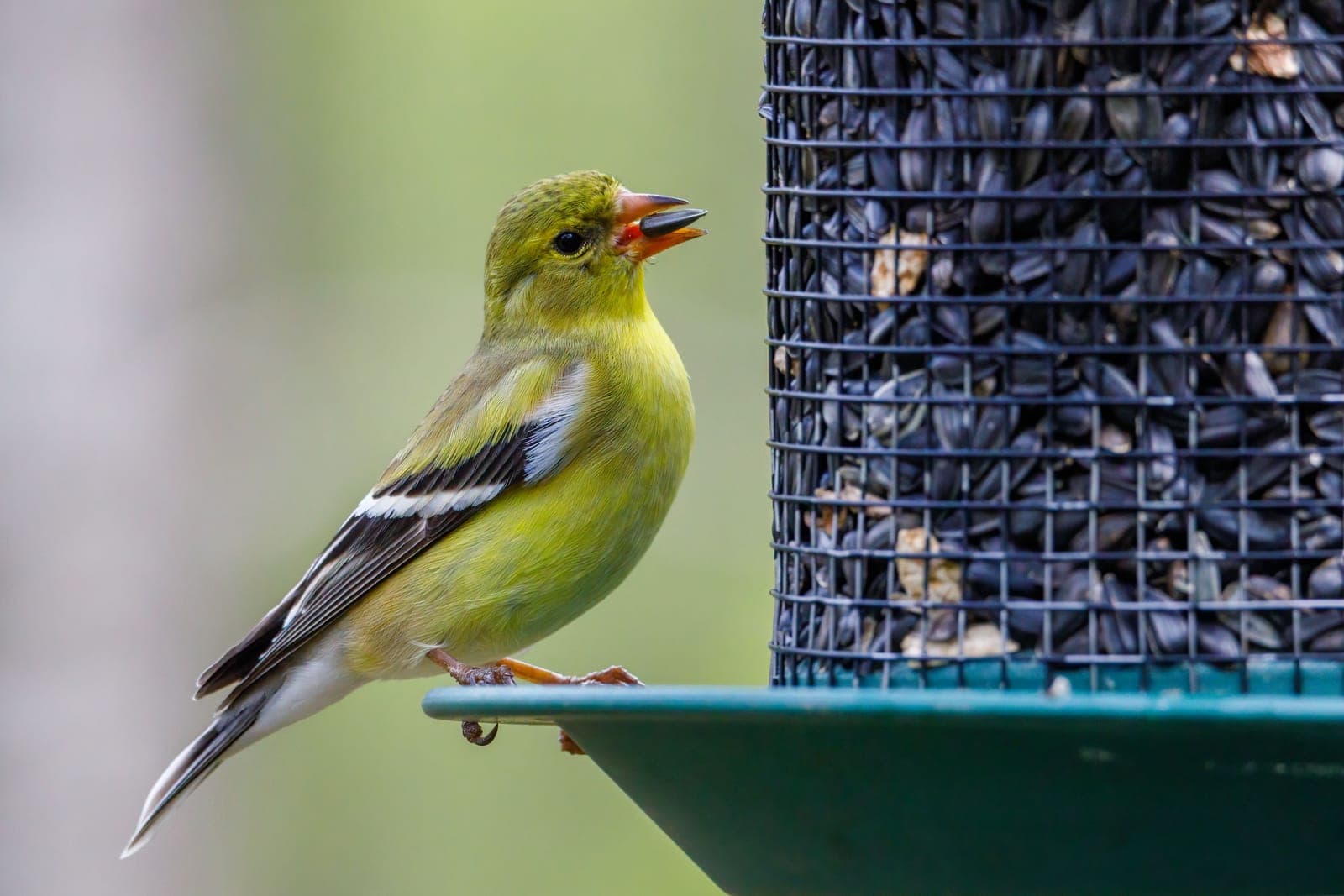
Hulled sunflower — hearts, chips, or a no-mess blend — is whole seed with the shell already removed. It is the right answer over a deck, a patio, a path or a balcony, and an expensive one over a lawn. The shelf price looks much higher than whole seed; per edible pound the gap is far smaller, because a fifth to a third of a whole seed is shell you paid to ship. The winter catch: hulled seed has no shell protecting it and spoils faster when it gets wet.
Winter Perch is funded by affiliate commission. If you buy through a link on this page we may earn a commission at no extra cost to you, and it never decides a ranking. Full disclosure · how we pick.
Quick picks
Ranked, with the trade-off named. Tap a row for the full write-up; the price button goes straight to Amazon.
| # | Product | Best for | Price |
|---|---|---|---|
| 1 |  Morning Song Sunflower Hearts & Chips, 10 lbTen pounds of kernels and nothing else — the size most people should buy, from a label that states sunflower kernels as the whole ingredient list. | The middle of the range | Check price on Amazon |
| 2 |  Wild Delight Deck, Porch N' Patio No Waste, 5 lbKernels, peanuts, pistachios and pumpkin seed with a published guaranteed analysis — the one bag here whose protein and fat numbers are on the label. | A no-mess blend with figures you can actually check | Check price on Amazon |
| 3 |  Pennington Select Sunflower Chips, 5 lbA five-pound bag of straight chips from a brand you can actually look up — the sensible way to find out whether no-mess seed suits your yard. | Trying hulled seed without committing to a sack | Check price on Amazon |
| 4 |  Sommer's Medium Sunflower Chips, 25 lbTwenty-five pounds of medium chips — the only honest way to make hulled seed cost-competitive, provided you have somewhere dry to keep it. | Price per pound, if you can store it | Check price on Amazon |
| 5 |  Kaytee Ultimate No Mess Wild Bird Seed, 9.75 lbEvery seed pre-hulled, so nothing accumulates underneath. The right answer over a deck or a path, and the wrong one if you are buying on price per pound. | Decks, patios and balconies where hulls are not welcome | Check price on Amazon |
#ad how we are funded · no live price right now
The picks in full
Top pick The middle of the range
Morning Song Sunflower Hearts & Chips, 10 lb
Ten pounds of kernels and nothing else — the size most people should buy, from a label that states sunflower kernels as the whole ingredient list.
Specifications
- Weight
- 10 lb
- Form
- Sunflower hearts and chips (hulled)
- Ingredients
- Listed as "Sunflower Kernels" — stated 100% kernels, shell-free
- Manufacturer
- Global Harvest Foods
- Model
- 15761
- Feeders
- Stated to suit tube, hopper, platform and smart feeders
- Guaranteed analysis
- Not published in the listings we could find
Trade-offs
- A single-ingredient bag — the ingredient list is the seed, which is rare in bird food
- Ten pounds is the size that balances price per pound against storing it dry all winter
- Mixed hearts and chips, so it flows through small ports as well as sitting on a tray
- Named manufacturer rather than an anonymous reseller
- Morning Song's own product page lists this line at 5.5 lb as Chipper Sunflower Seed, not at 10 lb, so the brand's page does not confirm this exact bag
- No guaranteed analysis published, so no protein or fat figure to compare against a blend
- Easy to confuse with Morning Song's Clean and Free No Mess blend, which is a different formulation containing millet and cracked corn
- Like all hulled seed, it goes off faster than whole seed once it gets wet
Who it is forThe reader who has decided hulled seed is right for their site and wants a straight bag of it at a sensible size.
Skip it ifSkip it if you want a documented guaranteed analysis before buying. Neither this nor the Pennington publishes one, and the Wild Delight blend on this page does.
#ad how we are funded · no live price right now
No. 2 A no-mess blend with figures you can actually check
Wild Delight Deck, Porch N' Patio No Waste, 5 lb
Kernels, peanuts, pistachios and pumpkin seed with a published guaranteed analysis — the one bag here whose protein and fat numbers are on the label.
Specifications
- Weight
- 5 lb
- Ingredients
- Sunflower kernels, peanuts, pistachios, hulled pumpkin seed, plus added vitamins, minerals, electrolytes and amino acids
- Crude protein
- 18% minimum
- Crude fat
- 40% minimum
- Crude fiber
- 7% maximum
- Excluded
- No corn, milo, millet or chemical preservatives
- Feeders
- Ports must be large enough for the nut and fruit pieces
- Manufacturer number
- 374050
Trade-offs
- A published guaranteed analysis — 18% protein and 40% fat minimum — which none of the straight-chip bags here offers
- 40% fat is a serious winter number, and fat is the currency of a cold night
- No corn, milo or millet, which is where cheap blends hide the weight
- Every component is edible, so the no-waste claim holds for the whole bag rather than just the sunflower
- The nut and pistachio pieces are large — a standard tube port will bridge or jam, so check your feeder before buying
- Costs more per pound than straight chips, because nuts cost more than sunflower
- Peanuts and pistachios draw squirrels and jays as effectively as they draw the birds you want
- Retailer listings are inconsistent about what else is in the bag, so read the tag on the one you receive
Who it is forSomeone feeding over a deck or patio who wants a mess-free blend with real published nutrition rather than a bag of unlabeled chips.
Skip it ifSkip it if you feed through a standard narrow-port tube. The pieces are sized for a hopper, a platform or a wide-port feeder, and in the wrong feeder it simply will not flow.
#ad how we are funded · no live price right now
Where these specs came from
No. 3 Trying hulled seed without committing to a sack
Pennington Select Sunflower Chips, 5 lb
A five-pound bag of straight chips from a brand you can actually look up — the sensible way to find out whether no-mess seed suits your yard.
Specifications
- Weight
- 5 lb
- Form
- Sunflower chips (hulled)
- Ingredients
- Sunflower chips, potassium iodide, vitamin A supplement, vegetable oil, vitamin D-3 supplement
- Hulls
- Stated as none by Pennington
- Model
- 100541088
- Allergen note
- Made in a facility that processes peanuts and other tree nuts
- Guaranteed analysis
- Not published in the listings we could find
Trade-offs
- Small enough to test the idea before buying a sack you might not want
- Straight chips rather than a blend, so nothing in the bag is filler
- A named brand with a product page you can check, which is not true of every chip seller
- Takes the same feeders as any small seed
- The worst price per pound here by a wide margin — small bags always are
- Pennington publishes no guaranteed analysis that we could find, so there is no protein or fat figure to compare
- One major retailer's listing for a twin-pack gives the primary ingredient as hulled sunflower seed rather than chips, which does not match the hull-free claim — worth reading the bag
- Hulled seed spoils faster than whole seed in wet weather, and a five-pound bag opened in November has to survive the season
Who it is forSomeone whose deck, path or window ledge is covered in hulls and who wants to test the fix cheaply before changing what they buy.
Skip it ifSkip it if you already know hulled seed suits you. Buy the biggest bag you can store dry instead — per pound this is the most expensive way to buy chips.
#ad how we are funded · no live price right now
No. 4 Price per pound, if you can store it
Sommer's Medium Sunflower Chips, 25 lb
Twenty-five pounds of medium chips — the only honest way to make hulled seed cost-competitive, provided you have somewhere dry to keep it.
Specifications
- Weight
- 25 lb
- Form
- Medium sunflower chips (hulled kernel)
- Sourcing
- Stated USA sourced
- Guaranteed analysis
- Not published in the listings we could find
- Brand detail
- Amazon-native seller with little published product documentation
Trade-offs
- By far the best price per pound of the straight chips here, which is the only way hulled seed competes on cost
- Medium chip size flows through most feeder ports rather than bridging
- One purchase covers a season, so you are not reordering in February
- Twenty-five pounds of hulled seed is a storage problem, not just a purchase — it must stay dry and cool or it will spoil before you use it
- The seller publishes very little: no guaranteed analysis and no real product documentation
- Buying this much of a seed type you have not tested is the expensive version of a mistake
- Hulled seed has no shell protecting it, so a damp sack degrades far faster than whole seed would
Who it is forSomeone already committed to hulled seed, with a dry bin and a yard busy enough to get through it.
Skip it ifSkip it unless you have read the storage page and have somewhere genuinely dry to put it. Spoiled seed is not a saving.
#ad how we are funded · no live price right now
No. 5 Decks, patios and balconies where hulls are not welcome
Kaytee Ultimate No Mess Wild Bird Seed, 9.75 lb
Every seed pre-hulled, so nothing accumulates underneath. The right answer over a deck or a path, and the wrong one if you are buying on price per pound.
Specifications
- Type
- Hull-free blend
- Bag
- 9.75 lb
- Hulls
- None — 100% edible
- Waste
- No shell debris under the feeder
- Targets
- Cardinals, finches, chickadees, nuthatches, woodpeckers, juncos
Trade-offs
- Nothing to sweep up, which is the entire point over a deck, a patio or a path
- 100% edible means you are not paying to ship and then dispose of shells
- No hulls also means no seed hull mat killing the grass under the feeder
- Broad species appeal, unlike the single-seed options here
- Considerably more expensive per pound than sunflower in the shell
- Hulled seed absorbs moisture faster and spoils sooner once it is damp — a real issue in a wet winter
- Because nothing is discarded, squirrels and starlings get full value from every beakful too
- 9.75 lb goes faster than the weight suggests, since none of it is shell
Who it is forFeeders over a deck, patio, balcony or path, where the mess under the feeder is the deciding factor.
Skip it ifSkip it if your feeder hangs over lawn or a border and you do not mind the hulls. You are paying a real premium purely for tidiness, and a wet week will spoil it faster than shelled seed.
#ad how we are funded · no live price right now
Why this page exists
Mess is the most common complaint about bird feeding, and nearly every page on this site that raises it answers the same way: use hulled sunflower. Seed catchers and no-mess feeding says it. Window feeders says it. Feeders for apartments and balconies says it.
None of them priced it, and the site had no page for the seed type itself — every other seed here has one, from black oil sunflower to safflower to millet. This is the missing one.
What you are actually paying for
A whole black oil sunflower seed is a kernel inside a shell, and you buy the shell by weight. Published figures for how much of the seed that shell represents vary by source: the FAO's processing tables put it at roughly 25 to 30 percent, Feedipedia cites USDA at about 20 percent, and other reviews give a band of 21 to 30 percent. Call it a fifth to a third.
That range is the whole argument, and we are deliberately not turning it into a single number. Take whatever the live prices above say, knock the shell fraction off the weight of the whole-seed bag, and compare what remains. The gap narrows sharply — sometimes to almost nothing, sometimes not. It never disappears entirely, because somebody had to do the hulling, but hulled seed is rarely the extravagance the shelf price implies.
The winter catch: hulled seed spoils faster
This is the thing to understand before you buy a sack, and it is the reason this page is not simply an advertisement for hearts.
A shell is weatherproofing. It keeps the kernel dry in a feeder that is rained on, snowed on and thawed repeatedly. Remove it and the kernel is exposed: it absorbs moisture, goes rancid faster, clumps, and grows mold sooner than whole seed in the same conditions. Winter is wet as well as cold, and a feeder full of damp hearts is a feeder full of spoiling food.
Mold at a feeder is a genuine health risk to birds rather than a housekeeping problem — what not to feed birds in winter covers why. So the practical rules for hulled seed are stricter than for whole:
- Put out what will be eaten in a day or two, not a full feeder you top up weekly.
- Use a feeder that drains. A solid tray under hearts is a bowl of wet kernels. The tube feeder page and the hopper page both rank drainage first for this reason.
- Keep the sack dry and cool, which matters far more here than with whole seed — bird seed storage containers covers that properly.
- Throw out anything that smells off or clumps. Rancid fat is not a marginal call.
Where hulled seed is the right answer
- Over a deck, patio, path or paving, where hulls accumulate somewhere you walk and will not rot away out of sight.
- On a balcony or at a window, where the mess lands on a sill, a neighbor's rail or a sitting area. This is the case where hulled seed is not a preference but the only version that works.
- Over a lawn you care about. A pile of hulls kills the grass beneath a feeder, and sunflower hulls are often said to suppress growth as well.
- Where rodents are a concern. Spilled seed under a feeder is what draws mice toward a house in winter, and hearts leave far less behind.
Where whole seed is still the better buy
Over rough ground, a border or a wild corner, the hulls simply disappear and the mess is not a problem you have. In that situation you are paying a premium to solve nothing, and whole black oil sunflower is the better value — it is the same kernel, with the packaging still on.
Whole seed also handles weather better, keeps longer in the bag, and suits the buyer who fills a large feeder once a week rather than topping up a small one daily. If your feeding style is set-and-forget, the shell is working for you.
Hearts, chips, or a blend?
| What it is | Flows through small ports | Best for | |
|---|---|---|---|
| Hearts | Whole kernels | Yes | General feeding, any feeder |
| Chips | Broken kernel pieces | Yes, and better on a tray | Small birds, trays, mixed flocks |
| No-mess blend | Kernels plus nuts, pistachios, pumpkin seed | Often not — pieces are large | Hoppers, platforms, wide ports |
The blend row is the one that catches people out. A no-mess blend containing nut and pistachio pieces will bridge or jam in a standard narrow-port tube, so check your feeder's ports against the bag before buying — the Wild Delight on this page states exactly that requirement.
One more distinction worth making: "no mess" and "no waste" are marketing terms, not a standard. Some blends sold that way still contain filler the birds reject — read the ingredient list, and if millet or cracked corn is high on it, you are buying mess again under a cleaner name. The filler problem is covered in the seed roundup.
What the labels do and do not tell you
Researching this page turned up something worth saying plainly: most straight hearts and chips bags publish no guaranteed analysis at all. Neither the Pennington nor the Morning Song bag here gives a protein or fat figure in any listing we could find, and the bulk seller publishes essentially nothing.
The Wild Delight blend is the exception — it publishes 18 percent crude protein minimum and 40 percent crude fat minimum. That 40 percent is the number that matters in winter, when fat is the currency of surviving a long night, and it is the only bag on this page where you can check it rather than assume it.
We have recorded the gaps in the spec tables rather than filling them with figures for sunflower kernels in general. A number from a nutrition database is not the same as a number from the bag you are buying.
What we would skip
What we would skip
Hulled seed over rough ground or a border
The hulls vanish into the undergrowth and cost you nothing. You are paying a premium to solve a problem you do not have — whole black oil sunflower is the same kernel with the packaging still on.
Filling a feeder with hearts and leaving it a week
Without a shell the kernel takes weather directly: it absorbs moisture, clumps and goes rancid faster than whole seed. Put out a day or two at a time, and use a feeder that drains.
A nut-and-fruit no-mess blend in a narrow-port tube
The pistachio and peanut pieces are sized for a hopper or a platform. In a standard tube they bridge and the feeder stops flowing, which reads as birds losing interest when it is actually a jam.
Trusting the words "no mess" on the bag
It is a marketing phrase with no standard behind it. Read the ingredient list — if millet or cracked corn is near the top, the birds will throw it on the ground exactly as they would from any cheap mix.
Buying twenty-five pounds before you have tested it
Hulled seed spoils faster than whole, so a large sack is a storage commitment rather than a bargain. Buy a small bag, see whether it suits your feeder and your weather, then scale up.
Where it fits
Hulled seed is a solution to a siting problem, not an upgrade to the food. The birds are getting the same sunflower kernel either way — the winter seed roundup covers what to feed, and this page covers which form of it suits where your feeder hangs. If the mess is the only complaint, a seed catcher is the cheaper fix over a lawn.
Questions people actually ask
- Are sunflower hearts worth the extra cost?
- Over a deck, patio, balcony or path, usually yes. Published figures put the shell at roughly a fifth to a third of a whole seed's weight, so per edible pound the gap is far smaller than the shelf price suggests. Over rough ground where hulls disappear, whole seed is the better buy.
- What is the difference between sunflower hearts and sunflower chips?
- Hearts are whole kernels; chips are broken pieces of the same kernel. Chips suit trays and small birds slightly better and flow well through small ports. Nutritionally they are the same seed.
- Does no-mess bird seed really leave no mess?
- Hulled seed leaves no hulls, which is most of the mess. But "no mess" is a marketing phrase with no standard behind it — some blends sold that way still contain millet or cracked corn that birds throw on the ground. Read the ingredient list.
- Does hulled sunflower seed go bad faster?
- Yes, and it is the main reason to be careful with it in winter. The shell is weatherproofing; without it the kernel absorbs moisture, clumps and goes rancid sooner. Put out a day or two at a time and keep the sack dry.
- Will sunflower hearts work in my feeder?
- Straight hearts and chips flow through essentially any seed feeder. A no-mess blend containing peanut and pistachio pieces is different — those need a hopper, a platform or wide ports, and will jam a narrow-port tube.
- Do sunflower hulls kill grass?
- A thick accumulation of hulls under a feeder will smother a lawn, and sunflower hulls are widely reported to suppress growth as well. Switching to hearts, or fitting a catcher, is the fix if the patch under your feeder has gone bare.
Sources
- FAO — Sunflower crude and refined oils: processing tables giving approximate proportions of shell and kernel in sunflower seed (roughly 25-30 percent shell)
- Feedipedia — Sunflower seeds: oil-type seed hulls given as about 20 percent of the seed, citing USDA (2010)
- That Pet Place — Wild Delight Deck, Porch N' Patio guaranteed analysis and ingredient list
- Pennington — Select Sunflower Chips product page: ingredients and no-hulls claim
Read next
- Black Oil Sunflower Seed: Why It Is the Default
Black oil against striped and hulled sunflower, why the thin shell decides it, and which bag size is genuinely cheapest.
- The Best Bird Seed for Winter
Five winter seeds ranked on usable fat, shell thickness and species reach — plus the cheap mix that is worth avoiding.
- The Best Bird Seed Catchers and No-Mess Feeding
Hoops, trays and pole-mounted catchers ranked on what they actually mount to — plus the hulled-seed route that removes the mess at source.
- The Best Bird Seed Storage Containers
Galvanized cans against airtight bins, ranked on which winter threat each one stops — rodents, raccoons or damp — plus where to put the container so it works.
- The Best Bird Feeders for Apartments and Balconies
Window mounts, rail clamps and deck hooks ranked for renters — plus the hulled-seed rule that decides whether your neighbors mind.