Winter feeding / Guide
Safflower Seed for Birds: The Squirrel Claim, Examined
Safflower is the one seed bought for who it keeps away rather than who it brings. That works more often than not, and the trade-off is that fewer birds want it.
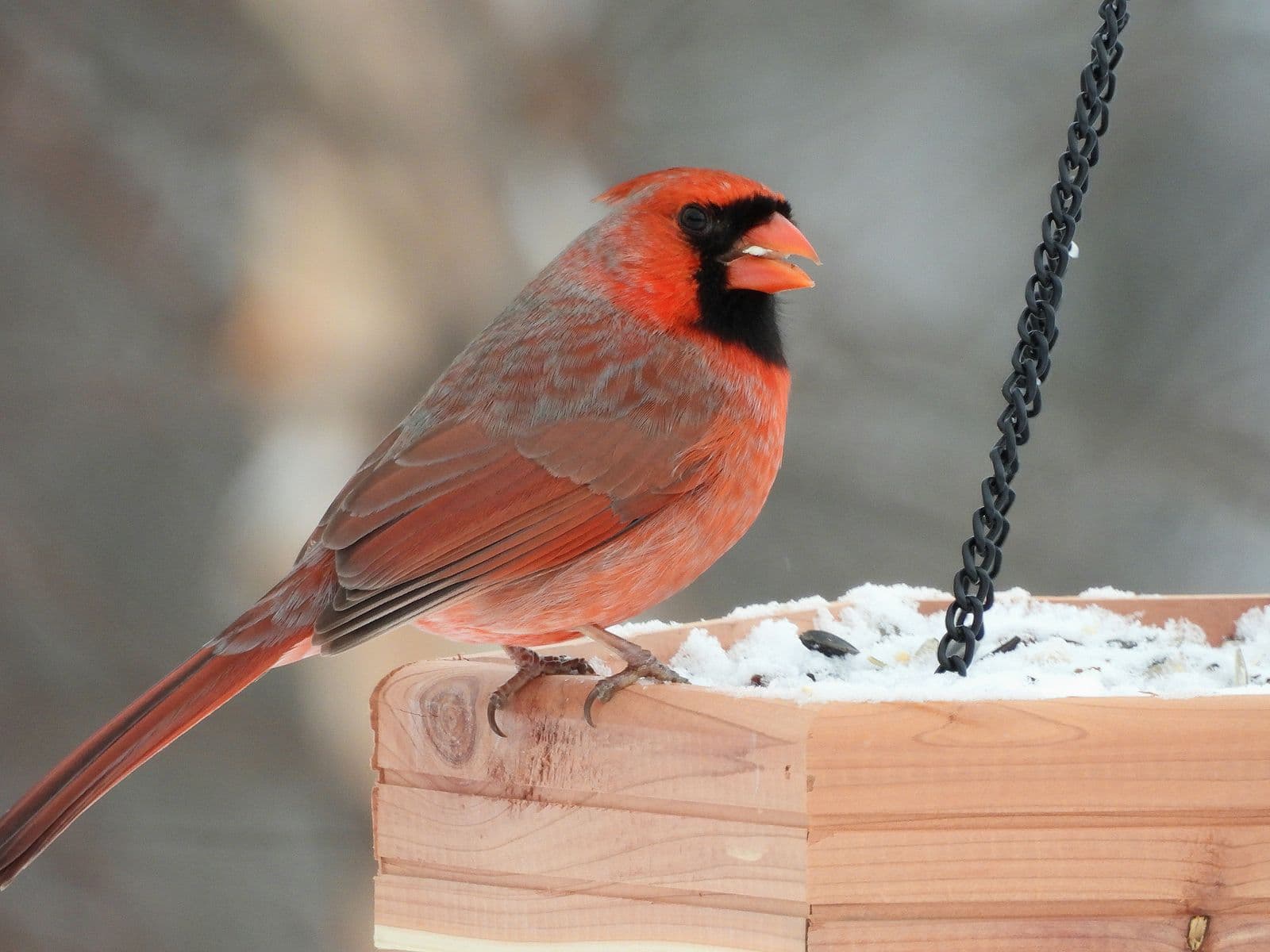
Safflower is the seed you buy for who it excludes. Squirrels, grackles and starlings mostly refuse it — the shell is hard and the kernel is bitter — while cardinals, chickadees, titmice, nuthatches, house finches and doves eat it readily. The trade-off is real: most birds prefer sunflower, so switching costs you some visitors. Start with a small bag in a hopper or tray, give it two weeks, and move to golden safflower if the white grade goes untouched.
Winter Perch is funded by affiliate commission. If you buy through a link on this page we may earn a commission at no extra cost to you, and it never decides a ranking. Full disclosure · how we pick.
Quick picks
Ranked, with the trade-off named. Tap a row for the full write-up; the price button goes straight to Amazon.
| # | Product | Best for | Price |
|---|---|---|---|
| 1 |  Wagner's 57075 Safflower Seed, 5 lbThe one seed on this page that solves a pest problem through taste rather than hardware — squirrels and grackles largely leave safflower alone, and cardinals prefer it. | Cardinals, when squirrels and grackles have taken over | $11.98 · See it on Amazon |
| 2 |  Pennington Select Safflower Seed, 15 lbStraight white safflower from a mainstream seed brand, in the size a yard that has adopted safflower actually gets through. This is the buy after a small bag has proved the birds take it. | The main bag once you know safflower works | $26.99 · See it on Amazon |
| 3 |  CountryMax Safflower Bird Seed, 50 lbFifty pounds, and the cheapest safflower per pound here by a clear margin. This only makes sense once safflower has become your default rather than a squirrel tactic you are still testing. | Running safflower as the house seed all winter | $72.99 · See it on Amazon |
| 4 |  Des Moines Feed Co. NutraSaff Golden Safflower, 20 lbNutraSaff is the golden safflower hybrid, sold on a thinner hull and higher oil and protein than traditional white safflower. Those figures are the developer's claims rather than anything we measured, but the thin hull is visible in the seed and this is the honest fix for birds that would not crack the white grade. | A yard where traditional safflower was ignored | $67.20 · See it on Amazon |
| 5 |  Meadow Ridge Farms Golden Safflower, 6 lbSix pounds of golden safflower, which is the right amount to find out whether the thinner hull changes anything in your yard. It is expensive per pound, and it is meant to be a test rather than a supply. | Testing golden safflower before buying the sack | $34.99 · See it on Amazon |
| 6 |  Nature's Way CWF19 Cedar Hopper Feeder with Suet Cages, 6 qtSix quarts of seed with a suet cage on each end — the best single answer to the winter refill problem if you are only hanging one thing. | One feeder that runs seed and suet together | $39.99 · See it on Amazon |
#ad how we are funded · price as of September 26, 2026
The picks in full
Top pick Cardinals, when squirrels and grackles have taken over
Wagner's 57075 Safflower Seed, 5 lb
The one seed on this page that solves a pest problem through taste rather than hardware — squirrels and grackles largely leave safflower alone, and cardinals prefer it.
Specifications
- Type
- 100% safflower
- Bag
- 5 lb (a 2-pack and a 50 lb bag are also listed)
- Shell
- Thick, white
- Origin
- Made in USA
- Targets
- Cardinals, chickadees, titmice, grosbeaks, doves
Trade-offs
- Most squirrels dislike it, which makes it the cheapest squirrel answer on the site — no mechanism, no baffle
- Grackles and starlings largely ignore it too, so it thins two pest problems at once
- Cardinals genuinely prefer it, and cardinals are the bird most people are trying to attract
- A 5 lb bag is a sensible way to test whether it works in your yard before committing
- Costs noticeably more per pound than black oil sunflower
- The thick white shell is harder work for the smallest bills than thin-shelled sunflower
- Fewer species eat it, so it narrows your feeder traffic rather than widening it
- Squirrel avoidance is a preference, not a barrier — a hungry animal will still eat it
Who it is forA yard with cardinals and a squirrel or grackle problem, run as a second feeder alongside sunflower.
Skip it ifSkip it as your only seed. You will lose the finches, and you are paying a premium to feed a narrower list than sunflower brings in.
#ad how we are funded · price as of September 26, 2026
No. 2 The main bag once you know safflower works
Pennington Select Safflower Seed, 15 lb
Straight white safflower from a mainstream seed brand, in the size a yard that has adopted safflower actually gets through. This is the buy after a small bag has proved the birds take it.
Specifications
- Size
- 15 lb
- Contents
- Straight safflower seed
Trade-offs
- Fifteen pounds is the realistic middle size, cheaper per pound than a 5 lb bag without committing to a sack
- Straight safflower rather than a mix, so nothing in the bag draws back the birds you are trying to exclude
- Widely stocked brand, which usually means fresher turnover than an obscure listing
- Hard white shell keeps better in storage than oily seed does
- Costs more per pound than black oil sunflower, for a seed fewer species eat
- Paper sack rather than a resealable bag, so it wants decanting into a sealed bin
- Traditional white safflower has a thick hull, which small-billed birds work harder at than the golden hybrid
- No published oil or protein figures on the listing, so you are buying the grade rather than a spec
Who it is forA yard where safflower has already been tried and the cardinals took it.
Skip it ifSkip it as a first purchase. Safflower is the one seed where a yard either accepts it or ignores it, and 15 lb is a lot of seed to find that out with.
#ad how we are funded · price as of September 26, 2026
Where these specs came from
No. 3 Running safflower as the house seed all winter
CountryMax Safflower Bird Seed, 50 lb
Fifty pounds, and the cheapest safflower per pound here by a clear margin. This only makes sense once safflower has become your default rather than a squirrel tactic you are still testing.
Specifications
- Size
- 50 lb
- Contents
- Straight safflower seed
Trade-offs
- Lowest cost per pound in this lineup, which is what makes feeding safflower all winter affordable
- One purchase covers a whole season for most yards running a hopper on safflower
- Straight seed, so there is no filler drawing grackles back to the feeder
- Fifty pounds needs a sealed bin and somewhere to keep it, because safflower stores well but not in an open sack
- Heavy and awkward to decant, with no small-bag escape route if your birds turn out to ignore it
- A large commitment to a seed that Cornell's own feeder project says most birds rank below sunflower
- If your local squirrels are among the ones that have learned to eat safflower, you are holding most of a sack
Who it is forSomeone who has already run safflower for a season and wants the per-pound price.
Skip it ifSkip it unless safflower is proven in your yard. Buy 5 lb, watch for two weeks, then come back to this.
#ad how we are funded · price as of September 26, 2026
No. 4 A yard where traditional safflower was ignored
Des Moines Feed Co. NutraSaff Golden Safflower, 20 lb
NutraSaff is the golden safflower hybrid, sold on a thinner hull and higher oil and protein than traditional white safflower. Those figures are the developer's claims rather than anything we measured, but the thin hull is visible in the seed and this is the honest fix for birds that would not crack the white grade.
Specifications
- Size
- 20 lb
- Type
- NutraSaff golden safflower
- Contents
- Straight safflower seed
Trade-offs
- The thinner hull is the real argument, and small-billed birds that gave up on white safflower will work this
- Twenty pounds at a per-pound price well under the small golden bags
- Keeps the pest-deterrent property that makes safflower worth feeding at all
- Leaves noticeably less shell debris under the feeder than thick-hulled white safflower
- Costs substantially more per pound than traditional white safflower
- The oil, protein and preference figures are marketing claims from the seed's developer, not independent tests
- Higher oil content means it goes stale faster than white safflower, so it wants sealed storage and turnover
- Harder to find restocked locally than a mainstream white safflower bag
Who it is forA yard that tried white safflower and watched the birds leave it.
Skip it ifSkip it if white safflower already works for you. You would be paying a premium to solve a problem you do not have.
#ad how we are funded · price as of September 26, 2026
No. 5 Testing golden safflower before buying the sack
Meadow Ridge Farms Golden Safflower, 6 lb
Six pounds of golden safflower, which is the right amount to find out whether the thinner hull changes anything in your yard. It is expensive per pound, and it is meant to be a test rather than a supply.
Specifications
- Size
- 6 lb
- Type
- Golden safflower
- Contents
- Straight safflower seed
Trade-offs
- Small enough that finding out costs little, which matters with a seed this hit-or-miss
- Same thin-hull advantage as the larger golden bags
- Enough to fill a hopper several times over, which is all a two-week trial needs
- Much the worst value per pound here, because you are buying the answer rather than the seed
- Empties quickly once cardinals and chickadees commit to it
- Same caveat as all golden safflower: the nutritional claims come from the seed's developer
Who it is forA first trial of golden safflower, or a top-up alongside a white safflower bag.
Skip it ifSkip it if you already know golden safflower works in your yard. The 20 lb bag is far cheaper per pound.
#ad how we are funded · price as of September 26, 2026
No. 6 One feeder that runs seed and suet together
Nature's Way CWF19 Cedar Hopper Feeder with Suet Cages, 6 qt
Six quarts of seed with a suet cage on each end — the best single answer to the winter refill problem if you are only hanging one thing.
Specifications
- Seed capacity
- 6 quarts
- Suet
- Integrated cages
- Material
- Cedar
- Roof
- Yes — covers seed and both cages
Trade-offs
- Six quarts is the longest refill interval on this page
- Seed and suet in one visit, which matters when the visit is in a blizzard
- The roof covers everything, so wet seed is much less of an issue
- Cedar, and it looks like furniture rather than kit
- No squirrel exclusion at all — it is a hopper, and hoppers are open
- A full six quarts of damp seed is a lot of seed to spoil at once
- Big and heavy on a hanger
Who it is forThe single-station yard, where one feeder has to do everything.
Skip it ifSkip it if squirrels run your yard. A hopper feeder with no mechanism is the easiest meal on this site.
#ad how we are funded · price as of September 26, 2026
What safflower actually is
A white seed about the size and shape of a sunflower kernel, grown commercially for oil and sold to the bird trade as a by-product of that. It looks enough like a hulled sunflower seed that people mistake the two in the bag, and it behaves nothing like one at the feeder.
Two properties do all the work. The shell is hard and smooth, which defeats birds and mammals that lack the bill or the jaw to crack it. And the kernel is bitter, which defeats the ones that can crack it but would rather not. Between them, those two facts are the entire commercial argument for safflower, and they are why it costs more per pound than black oil sunflower while feeding fewer species.
The honest version of the squirrel claim
It usually works. It is not a mechanism, and it is not a guarantee.
Squirrels generally avoid safflower, and the reason given is the bitter taste rather than any inability to open it. That is a preference, not an exclusion — and preferences are learned. Cornell's own seed guide notes that squirrels, house sparrows and European starlings mostly dislike safflower but that in some areas they appear to have developed a taste for it. That hedge matters. If you are buying safflower as your squirrel answer, buy a small bag first and find out what your squirrels have learned.
The comparison worth making: a baffled pole is a physical barrier and works on every squirrel that has ever lived. Safflower is a behavioral deterrent and works on most squirrels in most places. If squirrels are your main problem, the baffle is the reliable purchase and safflower is the thing you add on top — the squirrel-proof feeder roundup covers the hardware side.
Grackles and starlings
This part holds up better, and it is the reason a lot of experienced feeders keep safflower on hand.
Starlings struggle to crack safflower at all — the shell beats their bill. Grackles and other blackbirds can open it and generally will not, because of the taste. So a feeder switched to straight safflower loses the flock that empties a sunflower feeder in an afternoon, while keeping the cardinals. That is a genuinely useful tool, and it works alongside the mechanical approaches in starling- and grackle-proof feeders rather than replacing them.
| Traditional white safflower | Golden safflower (NutraSaff) | |
|---|---|---|
| Hull | Thick, hard, smooth | Noticeably thinner |
| Species that take it | Cardinals, doves, chickadees, titmice, nuthatches, house finches | The same plus more, including woodpeckers and finches |
| Shell debris | Heavy | Light |
| Cost per pound | Lower | Substantially higher |
| Keeps in storage | Very well | Less well — higher oil goes stale faster |
| Deters squirrels and grackles | Usually | Usually, same as white |
The oil, protein and fat advantages claimed for golden safflower come from the hybrid's developer and its retailers, not from independent testing, so we report them as claims. The thinner hull is visible in the seed and is the part you can check yourself.
Which birds eat it, and which give up
A shorter list than sunflower, and knowing it in advance is what stops safflower being a disappointment.
- Northern cardinals — the headline bird, and the reason most people buy safflower. A heavy conical bill opens it without effort.
- Mourning doves, which take it as readily as they take anything.
- Chickadees and titmice, which will work a safflower seed on a branch the way they work a sunflower seed.
- Nuthatches, similarly.
- House finches, usually.
- Woodpeckers, more reliably on the golden grade than the white.
Who gives up: goldfinches and siskins are built for small oilseed and want nyjer instead; juncos and native sparrows are ground feeders that would rather have white millet; and jays are inconsistent about it. If your yard is mostly finches and ground birds, safflower solves a problem you do not have.
How we judged these
How we picked
- Straight safflower, not a mix, because the exclusion effect is the product and any other ingredient undoes it.
- Grade stated on the label — white or golden — since they solve different problems and are not interchangeable.
- Bag size matched to a real trial, given that whether safflower works depends on which birds and which squirrels a yard already holds.
- Claims separated from facts. Where a seller publishes oil, protein or preference figures we report who is making the claim rather than repeating it as measured.
- Paired with a format cardinals can use, because a hopper or tray is what decides whether safflower gets eaten.
- Storage and staleness, which matter more for the higher-oil golden grade than for white.
- Weighed honestly against sunflower and suet, both of which sit above safflower in the winter order.
- Live price and availability, refreshed daily.
We have not tested any of these. What we did instead: read the manufacturers’ own listings, compiled the published specifications, computed the running cost at a cited electricity rate, and refreshed the prices daily. The full method is published.
The caveat nobody selling safflower mentions
Cornell's Project FeederWatch puts it plainly: safflower attracts cardinals and other big-billed birds, but in their experience most birds prefer sunflower seeds over safflower.
That single sentence is the thing to weigh against every marketing claim in the category. Safflower is not a better seed than black oil sunflower. It is a more selective one. You are trading total activity at the feeder for control over who shows up, and whether that is a good trade depends entirely on whether you currently have a grackle or squirrel problem worth trading for.
The practical consequence is that safflower works best as one feeder in a setup, not as the only seed in the yard. Keep sunflower running somewhere for the birds that want it and let the safflower feeder be the one the bullies ignore. The feeding station setup guide covers how to arrange that so the two do not compete.
How to switch a feeder to safflower
Birds need to recognize a new food, and an abrupt switch reads to them as an empty feeder.
- Use a hopper, tray or platform, not a tube built for small seed. Cardinals will not cling to a vertical port — they need somewhere to stand, which is why the hopper is in the picks above.
- Mix it in first. Start at roughly a quarter safflower to three quarters sunflower, then shift the ratio over a week or two. The birds that will eat safflower find it while the familiar seed is still there.
- Give it two full weeks at straight safflower before deciding. Adoption is slower than with sunflower, and the first few days tell you almost nothing.
- Watch what leaves as well as what arrives. Losing the grackles is the point. Losing the cardinals means your yard is one of the ones that will not take white safflower, and golden is the next thing to try.
- Store it sealed. Safflower keeps better than oily seed, but a paper sack in a garage is still a rodent invitation — sealed storage applies here as much as anywhere.
- Clear the old seed out rather than topping up, so you are not reading a mixed feeder as a safflower result.
White or golden
Buy white first. It is cheaper, it stores better, and for cardinals it is entirely sufficient — a cardinal's bill does not care how thick the hull is.
Move to golden for one specific reason: the white grade went untouched by the small birds you wanted. The thinner hull is a real, visible difference, and chickadees, titmice and woodpeckers that gave up on white safflower will often work golden. That is what you are paying the premium for. It is not a general upgrade, and the nutritional figures attached to it are the seed developer's claims rather than measurements anyone has published independently.
Where safflower sits in the winter order
Third or fourth, and never first.
Fat carries roughly twice the energy per gram of carbohydrate, which is why suet and black oil sunflower are what a bird facing a sub-freezing night actually needs. Safflower is a decent oilseed, well ahead of starchy options like cracked corn, but it is bought for selectivity rather than nutrition. Get the winter feeding order right first, then add a safflower feeder to solve a specific problem.
One practical note in its favor: safflower does not sprout the way spilled mixed seed does, and the hulls are less of a mess than sunflower shells if you are feeding over a lawn or a deck. Seed catchers and no-mess feeding covers the rest of that problem.
What we would skip
What we would skip
Safflower as your first and only squirrel fix
It is a taste preference, not a barrier, and Cornell notes squirrels in some areas have learned to eat it. A baffle on a pole works on every squirrel; safflower works on most of them, most places. Buy the baffle first.
A 50 lb sack as a first purchase
Safflower is the seed most likely to be ignored in a given yard. Five pounds and two weeks answers the question; fifty pounds answers it expensively and leaves you storing the evidence.
Safflower in a tube feeder with small ports
The birds that eat safflower are mostly perching birds that need somewhere to stand. A tube built for nyjer or a port-only tube gives cardinals and doves nothing to use, and you will read that as the seed failing.
Mixes that list safflower a long way down the label
The whole point of safflower is that the bag contains nothing the bullies want. A mix with sunflower and millet in it brings the grackles and squirrels straight back, and you have paid a safflower price for a standard mix.
Golden safflower before you have tried white
Golden costs substantially more per pound and its advantage is specific — a thinner hull for small-billed birds. For cardinals it changes nothing. Try white, and only move up if the small birds ignored it.
Safflower as a replacement for suet in deep cold
Fat carries roughly twice the energy per gram. In a hard freeze the birds need suet and sunflower; safflower is a selectivity tool rather than a cold-weather calorie source.
Parrot or cockatiel safflower blends
Several safflower products on the market are cage-bird foods with added pellets and dried fruit. They are formulated for a pet indoors, priced accordingly, and are not what you want in a yard feeder.
Where this fits
Safflower is the seed two other pages on this site already send you looking for. Bird feeders for cardinals pairs it with a hopper and a cardinal ring; starling- and grackle-proof feeders reaches for it when the mechanical fixes are not enough. The winter seed roundup puts it alongside every other option, and black oil sunflower is still the seed to buy first.
Questions people actually ask
- Do squirrels eat safflower seed?
- Usually not. Squirrels can crack safflower but generally avoid the bitter kernel, which is why it is sold as a deterrent. It is a preference rather than a barrier, though, and Cornell notes that squirrels in some areas have developed a taste for it. Buy a small bag before committing.
- What birds eat safflower seed?
- Northern cardinals above all, plus mourning doves, chickadees, titmice, nuthatches and house finches. Woodpeckers take it more readily on the golden grade. Goldfinches, siskins, juncos and native sparrows largely ignore it.
- Do grackles and starlings eat safflower?
- Mostly no, and this is the strongest argument for safflower. Starlings have trouble cracking the shell at all, and grackles can open it but generally dislike the taste. Switching a feeder to straight safflower is one of the more effective ways to lose a blackbird flock while keeping the cardinals.
- Is safflower better than black oil sunflower?
- No, it is more selective. Cornell's Project FeederWatch says that in their experience most birds prefer sunflower over safflower. You are trading total feeder activity for control over which species turn up, which is only worth it if you have a squirrel or blackbird problem.
- What is golden safflower, and is it worth the extra cost?
- Golden safflower, sold as NutraSaff, is a hybrid with a noticeably thinner hull than traditional white safflower. Worth the premium for one reason: small-billed birds that ignored white safflower will often take it. For cardinals it changes nothing. The oil and protein advantages claimed for it come from the seed's developer rather than independent testing.
- How long does it take birds to accept safflower?
- Give it two full weeks. Start by mixing roughly a quarter safflower into sunflower and shift the ratio over a week or two, because an abrupt switch reads to birds as an empty feeder. The first few days tell you very little.
Sources
Read next
- The Best Bird Seed for Winter
Five winter seeds ranked on usable fat, shell thickness and species reach — plus the cheap mix that is worth avoiding.
- Black Oil Sunflower Seed: Why It Is the Default
Black oil against striped and hulled sunflower, why the thin shell decides it, and which bag size is genuinely cheapest.
- The Best Bird Feeders for Cardinals
Perch width is the spec that decides whether cardinals use a feeder. Six picks ranked on it, plus the one seed that brings cardinals and repels squirrels.
- The Best Starling- and Grackle-Proof Bird Feeders
Why squirrel hardware fails on starlings, the three approaches that work, and six picks ranked on which birds each one lets through.