Winter birding / Roundup
The Best Gifts for Bird Watchers
The difficulty with buying for a birder is that the obvious gifts are the ones they have already bought themselves. Here is how to pick by what they are missing.

Buy by what they already own, not by price. Someone with no binoculars needs binoculars. Someone who has birded for years almost certainly owns those and does not own a harness — the accessory everyone means to buy and never does. And the gift almost no birder buys for themselves is a heated bird bath, because it needs an outdoor outlet and a decision.
Winter Perch is funded by affiliate commission. If you buy through a link on this page we may earn a commission at no extra cost to you, and it never decides a ranking. Full disclosure · how we pick.
Quick picks
Ranked, with the trade-off named. Tap a row for the full write-up; the price button goes straight to Amazon.
| # | Product | Best for | Price |
|---|---|---|---|
| 1 |  Nikon PROSTAFF P3 8x42 BinocularsO-ring sealed and nitrogen purged, which is the spec that matters when you carry glass from a cold yard into a warm kitchen twice a day. | Winter birding, because of the nitrogen purge | $129.95 · See it on Amazon |
| 2 |  Bird Buddy Pro Solar Smart Feeder with Camera2K video off a larger sensor with HDR, which is the specification that matters in December: winter light is flat, gray and brief. | Watching the feeder from inside on the days you will not go out | $239.99 · See it on Amazon |
| 3 | 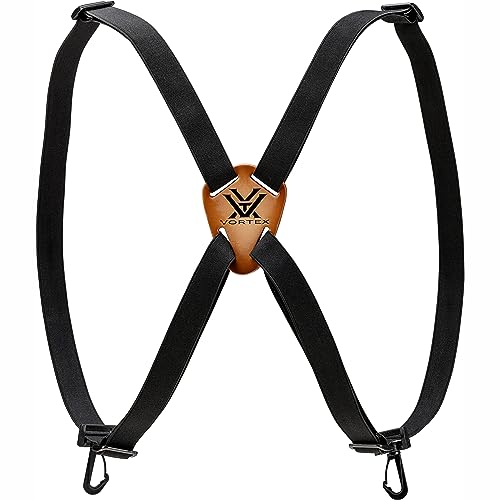 Vortex Binocular Harness StrapAn elastic chest harness that moves the weight of a binocular off your neck and onto your shoulders, backed by the same VIP warranty as Vortex optics. | The harness to buy | $24.00 · See it on Amazon |
| 4 |  The Sibley Field Guide to Birds of Eastern North AmericaSibley draws the plumages other guides skip — winter adults, first-winter birds, worn and fresh — which is the exact problem a January sparrow presents. | Winter plumages, which is where most guides give up | $29.84 · See it on Amazon |
| 5 |  Celestron Nature 10x25 MonocularThe only monocular here from a company that makes binoculars for a living. Small, honest 10x25, and it does not pretend to be a telescope. | A pocket optic from a real optics brand | $47.99 · See it on Amazon |
| 6 |  K&H Super Ice Eliminator Bird Bath De-Icer, 80 WThe 50 W unit with enough extra element to cope with a bigger basin and a colder night. If you are buying one de-icer without measuring anything, buy this one. | Most yards, most winters — the default de-icer | $28.91 · See it on Amazon |
#ad how we are funded · price as of September 21, 2026
The picks in full
Top pick Winter birding, because of the nitrogen purge
Nikon PROSTAFF P3 8x42 Binoculars
O-ring sealed and nitrogen purged, which is the spec that matters when you carry glass from a cold yard into a warm kitchen twice a day.
Specifications
- Configuration
- 8x42
- Field of view
- 377 ft at 1,000 yd
- Sealing
- O-ring sealed, nitrogen purged
- Body
- Rubber armored
- Eye relief
- Long — works over glasses
Trade-offs
- Nitrogen purging stops internal fogging on the cold-to-warm transition that defines winter birding
- 377 ft of field makes finding a moving bird in bare branches far easier
- 8x is steady in gloved, cold hands where 10x is not
- Long eye relief means it works with spectacles on
- 42 mm objectives are bulky for a coat pocket
- 8x is not enough reach for distant waterfowl
- The rubber armor stiffens noticeably in deep cold
Who it is forThe main pair for backyard and local winter birding.
Skip it ifSkip it if you mostly scan a frozen lake for ducks at range. You want 10x and a tripod, not 8x42.
#ad how we are funded · price as of September 21, 2026
No. 2 Watching the feeder from inside on the days you will not go out
Bird Buddy Pro Solar Smart Feeder with Camera
2K video off a larger sensor with HDR, which is the specification that matters in December: winter light is flat, gray and brief.
Specifications
- Video
- 2K
- Stills
- 5 MP
- Sensor
- 1/2.7", HDR
- Power
- Solar roof
- Software
- AI species identification
Trade-offs
- The larger sensor and HDR are the difference between a usable and a useless winter image
- The solar roof reduces the number of times you carry a battery indoors at minus five
- Species ID is genuinely good on the common feeder birds
- It gets people watching birds on days nobody goes outside
- Solar charging in a northern December is thin — expect to charge it by hand anyway
- Lithium batteries lose capacity in the cold, and this lives outdoors
- It is a seed feeder first, so it does nothing for suet or water
- Costs several times a good pair of binoculars
Who it is forHouseholds where the feeder is a shared thing, and anyone who cannot get out much.
Skip it ifSkip it if you want to see birds well. A camera shows you one perch; binoculars show you the whole yard, and cost far less.
#ad how we are funded · price as of September 21, 2026
No. 3 The harness to buy
Vortex Binocular Harness Strap
An elastic chest harness that moves the weight of a binocular off your neck and onto your shoulders, backed by the same VIP warranty as Vortex optics.
Specifications
- Type
- Chest harness
- Warranty
- Vortex VIP — unlimited lifetime, transferable
Trade-offs
- Takes the load off the neck, which is the entire point and is felt within an hour
- Holds the binocular against the chest so it does not swing when you walk or bend
- Elastic, so the binocular still lifts to the eyes without unclipping anything
- Covered by Vortex's VIP warranty, which is unlimited, lifetime and transferable
- Over a thick winter coat the straps need re-adjusting, and they are fiddly in gloves
- A chest harness sits over a zip, so getting into a jacket pocket means working around it
- Elastic loses tension over years of use
- Not adjustable enough for every body shape — some people find the X-back sits wrong
Who it is forAnyone who carries binoculars for more than an hour at a time.
Skip it ifSkip it if your birding is from a window or a car. A harness solves a carrying problem you do not have.
#ad how we are funded · price as of September 21, 2026
No. 4 Winter plumages, which is where most guides give up
The Sibley Field Guide to Birds of Eastern North America
Sibley draws the plumages other guides skip — winter adults, first-winter birds, worn and fresh — which is the exact problem a January sparrow presents.
Specifications
- Coverage
- 650 species east of the Rockies, plus regional populations
- Illustrations
- More than 4,200
- Per entry
- Frequency, nesting, behavior, food, voice, key field marks
- Format
- Regional field guide
Trade-offs
- Multiple plumages per species, which is precisely what winter identification needs
- Illustrations rather than photographs, so the field marks are drawn to be comparable
- The regional split keeps the book to a carryable size
- Text covers frequency and behavior, not just appearance
- Eastern edition only — the wrong book if you are west of the Rockies
- Denser than a beginner needs; a first-time birder may find it overwhelming
- Still a book, and the free Merlin app identifies common feeder birds faster
Who it is forEastern and central US birders who have got past the obvious species.
Skip it ifSkip it if you only want to name the birds at your feeder. Merlin is free, faster and good enough for the common two dozen.
#ad how we are funded · price as of September 21, 2026
No. 5 A pocket optic from a real optics brand
Celestron Nature 10x25 Monocular
The only monocular here from a company that makes binoculars for a living. Small, honest 10x25, and it does not pretend to be a telescope.
Specifications
- Magnification
- 10x
- Objective
- 25 mm
- Maker
- Celestron
Trade-offs
- A real optics brand, which in the monocular market is unusual and worth paying for
- 25 mm objective is honest about what a pocket optic can gather
- Fits a coat pocket, which is the entire point of a monocular in winter
- No inflated magnification claim on the box
- A 25 mm objective gathers little light, and winter birding happens in poor light
- 10x in one hand shakes visibly; there is no second hand to steady it
- One eye means no depth perception and more eye strain over a long session
- A cheap 8x42 binocular outperforms it for birding in every way except pocketability
Who it is forA coat-pocket optic for walks where carrying binoculars is not worth it.
Skip it ifSkip it if this is your only optic for birding. Buy 8x42 binoculars — a monocular is a supplement, not a substitute.
#ad how we are funded · price as of September 21, 2026
No. 6 Most yards, most winters — the default de-icer
K&H Super Ice Eliminator Bird Bath De-Icer, 80 W
The 50 W unit with enough extra element to cope with a bigger basin and a colder night. If you are buying one de-icer without measuring anything, buy this one.
Specifications
- Rated watts
- 80 W
- Form
- Submersible, natural rock shape
- Control
- Automatic
- Finish
- Paintable enamel
- Safety
- Safety listed for outdoor submersible use
Trade-offs
- 80 W is the sweet spot: enough for a 20-inch basin, well under a 150 W bath
- Automatic, so there is no switch to forget
- Same drop-in convenience as the 50 W, same paintable finish
- Works in the bath you already own, at any mount height
- 60 percent more draw than the 50 W for buyers with a small basin who did not need it
- Still a cord in the water
- The rock shape takes up basin space small birds could be standing in
Wattage: 80 W
K&H states 80 watts, and the listing is explicit that the unit is safety listed and automatic. Eighty watts holds a typical 16 to 20 inch basin open through a normal northern winter night.
At full draw for a four-month winter (120 days), plugged in around the clock: 80 W x 2880 h = 230.40 kWh, x $0.1834/kWh = $42.26 — $42.26 at $0.1834/kWh. A thermostatic unit will land under that.
Who it is forThe default buyer: an existing 16 to 20 inch bath, a normal northern winter, no interest in replacing the bath itself.
Skip it ifSkip it if your basin is under about 14 inches. The 50 W version does that job and costs less to run every single day of the winter.
#ad how we are funded · price as of September 21, 2026
Pick by what is missing
Birding is a hobby where people equip themselves steadily, which makes gift-buying hard: the obvious present is usually the thing they bought two years ago. Work down this list and stop at the first gap.
| If they... | Buy | Why |
|---|---|---|
| Have no binoculars | An 8x42 binocular | Nothing else changes their birding as much. Stop here |
| Have cheap binoculars | A better 8x42 | The step from bad glass to decent glass is the biggest upgrade in the hobby |
| Have good binoculars, no harness | A harness | The thing everyone means to buy and never does |
| Watch from a window | A camera feeder | Close-up birds without going outside; good for households |
| Cannot identify what they see | A regional field guide | Buy the region they live in, not a continental guide |
| Have a yard but no water | A heated bath or de-icer | The thing most birders never get round to, and the highest-impact |
If you do not know which of these applies, a regional field guide is the safest gift on the page — it is useful at every level and nobody owns every guide.
How we judged these
How we picked
- Sorted by what the recipient already owns, since the hard part of this category is avoiding duplication rather than finding products.
- Only things covered in depth elsewhere on this site, so every pick has a full write-up behind it rather than a line of gift copy.
- Practical constraints flagged, such as the outdoor outlet a heated bath needs.
- Explicit warnings about the popular gifts that disappoint, which is most of the value here.
- No novelty items, on the grounds that they fail as products regardless of how they look wrapped.
- Live price and availability, refreshed daily.
We have not tested any of these. What we did instead: read the manufacturers’ own listings, compiled the published specifications, computed the running cost at a cited electricity rate, and refreshed the prices daily. The full method is published.
Buying binoculars as a gift
The highest-value gift here and the easiest to get wrong, so three rules.
- 8x42, not 10x42 and not a compact. Eight is steady, 42 gathers light, and it is what almost every experienced birder uses. The full argument is here.
- Do not go under about a hundred dollars. Below that the optics are dim and hard to focus, and a beginner concludes birding is frustrating when the equipment is. The price floor, explained.
- Avoid anything with a zoom, a camera or a compass built in. Every one of those compromises the optics for a feature nobody uses twice.
The gift nobody buys themselves
Worth singling out, because it is the most interesting answer to this question.
Most keen birders have binoculars, a guide and feeders. What they very often do not have is open water in winter — because it needs an outdoor outlet, a decision about wattage, and a slightly daunting-looking purchase. It is also, on this site's argument, the single highest-impact thing in a winter yard: seed and suet stay edible under snow, but standing water does not stay liquid.
What tends to disappoint
Not because these are bad things, but because they are the gifts birders most often already have or quietly do not want.
- A second field guide for a region they do not bird. Continental guides spread the same page count over twice the species; a regional one is more useful and they may already own it.
- Novelty feeders. Anything shaped like a teapot or a boot leaks, does not come apart to clean, and is the first thing quietly retired.
- Bird identification apps and subscriptions. Merlin is free and excellent, and most birders already have it.
- Generic 'bird lover' gift sets. Usually a low-quality feeder plus a small bag of filler-heavy seed.
- Seed, unless you know what they feed. Preferences are specific, bags are heavy, and cheap mixes are mostly filler.
What we would skip
What we would skip
Binoculars under about a hundred dollars
Dim, edge-soft and hard to focus, and worst in the flat winter light a gift will first be used in. A beginner given bad optics usually concludes that birding is frustrating rather than that the equipment is.
Zoom binoculars, or any with a camera or compass built in
Each extra feature compromises the optics and adds a failure point. A plain fixed 8x42 outperforms them at everything that matters.
A continental field guide for someone who birds one region
The same page count spread over roughly twice the species means fewer plumages each — and winter plumages are exactly where guides get tested. Buy the regional edition for where they live.
Novelty and decorative feeders
Shaped feeders leak, rarely come apart for cleaning, and hold very little. They look like a thoughtful gift and get quietly replaced within a season.
A heated bath for someone with no outdoor outlet
It needs GFCI-protected outdoor power within reach. Without that it becomes a gift that creates a problem, and indoor extension cords run outside are genuinely dangerous.
Bird seed, unless you know exactly what they use
Preferences are specific, the bags are heavy to post, and gift-set seed is usually padded with milo and wheat that northern feeder birds kick straight to the ground.
Where this fits
Every pick here is covered in depth elsewhere on the site: binoculars for beginners, feeder cameras, binocular harnesses, field guides and heated bird baths. If you are buying for someone with no yard at all, balcony feeders is the better list.
Questions people actually ask
- What is the best gift for a bird watcher?
- Work by what they already own. No binoculars means binoculars. Good binoculars but no harness means a harness — the accessory most birders never get round to buying. A yard with no winter water means a heated bath or de-icer.
- What binoculars should I buy as a gift for birding?
- An 8x42 pair costing at least around a hundred dollars. Eight times magnification is steady to hold and 42 mm gathers enough light for dim days. Avoid zooms, compacts and anything with a camera built in.
- What should I not buy a bird watcher?
- Cheap binoculars, novelty or decorative feeders, continental field guides when they bird one region, identification app subscriptions when Merlin is free, and bird seed unless you know exactly what they use.
- Is a heated bird bath a good gift?
- It is among the highest-impact gifts for someone with a yard, because open water is scarcer than food in a freeze. Check first that they have a GFCI-protected outdoor outlet within reach, or it becomes a problem gift.
- What is a good gift for someone just starting bird watching?
- Binoculars, and then a regional field guide. Those two cover the whole activity. Everything else is an accessory to them, and a beginner with bad optics usually gives up.
- What do you get a birder who has everything?
- A harness for the binoculars they already own, or a heated bird bath — both are things experienced birders routinely mean to buy and do not, for different reasons.
Sources
Read next
- The Best Binoculars for Beginner Bird Watching
Four binoculars across three price tiers, ranked on the specs that matter for a first pair — with the honest floor below which they are not worth buying.
- The Best Binocular Harnesses
Elastic chest harnesses ranked on load spreading and adjustment range, with the winter-coat fit problem stated plainly.
- The Best Field Guides for Winter Bird ID
Four field guides ranked on plumage coverage — the thing that decides whether a drab January bird is identifiable — and when Merlin beats all of them.
- The Best Heated Bird Baths for Winter
Nine complete heated baths ranked on published wattage, basin size and mount type, with running cost computed for each.