Winter birding / Comparison
Nikon PROSTAFF P3 vs Celestron Nature DX: 8x42 Head to Head
Two binoculars at almost the same price, separated by two numbers that point in opposite directions. Which one is right depends entirely on how far away the bird is and whether you wear glasses.
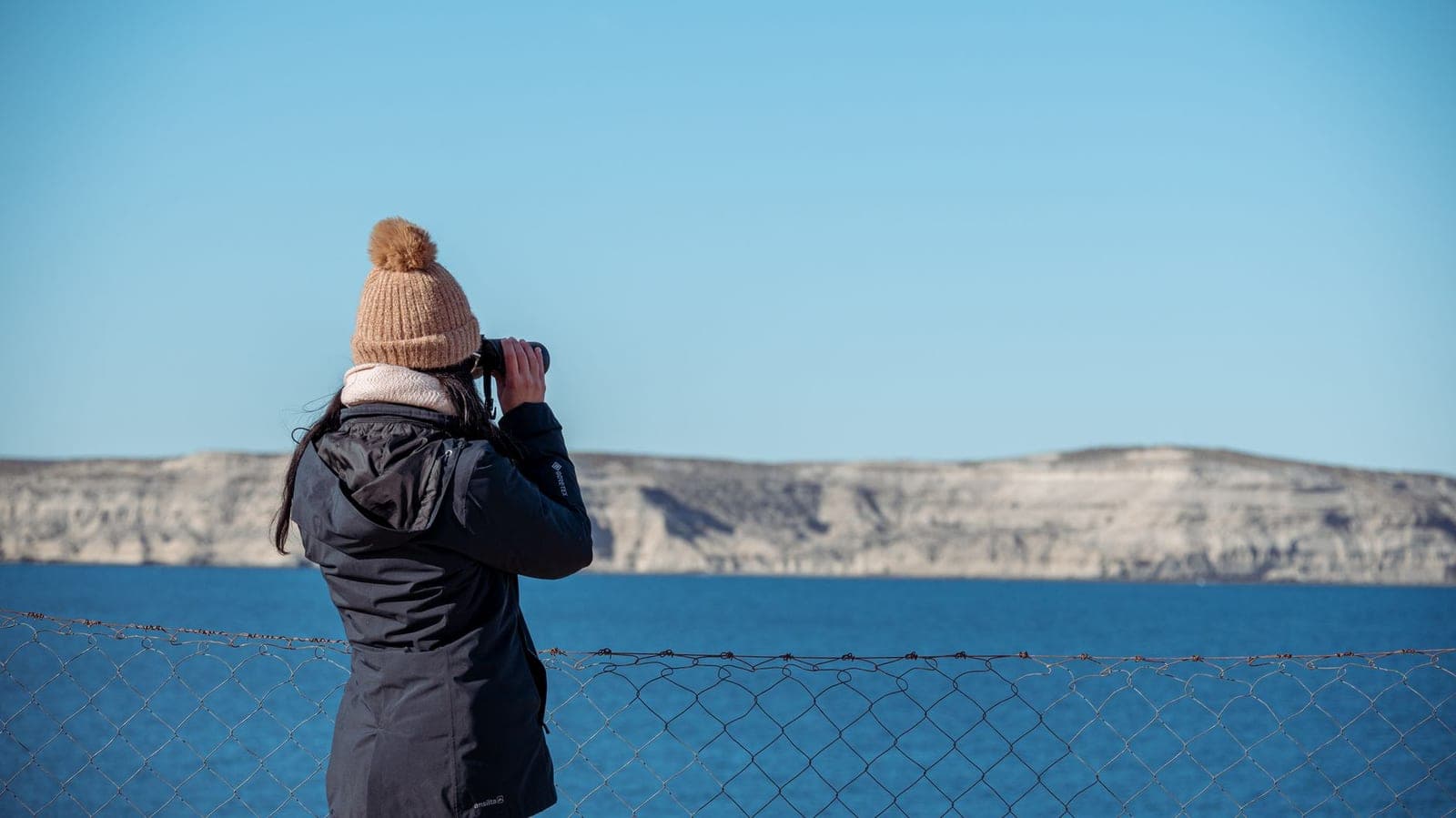
For a feeder, a bath and a small yard, buy the Celestron Nature DX 8x42. It publishes a 6.5 ft close focus against the Nikon's 9.8 ft, a slightly wider field, and its full optical specification — usually for less money. For glasses, gloves and long walks, buy the Nikon PROSTAFF P3 8x42: 20.2 mm of eye relief against 17.5 mm, and 20.3 oz against 22.2 oz. Both are waterproof and nitrogen filled, so neither will fog on you.
Winter Perch is funded by affiliate commission. If you buy through a link on this page we may earn a commission at no extra cost to you, and it never decides a ranking. Full disclosure · how we pick.
Quick picks
Ranked, with the trade-off named. Tap a row for the full write-up; the price button goes straight to Amazon.
| # | Product | Best for | Price |
|---|---|---|---|
| 1 |  Celestron Nature DX 8x42 BinocularsA 7.4-degree field on fully multi-coated BaK-4 glass, waterproof and fogproof — the widest view in this group, and width is what finds a chickadee in a thicket. | The widest field of view at this price | Check price on Amazon |
| 2 |  Nikon PROSTAFF P3 8x42 BinocularsO-ring sealed and nitrogen purged, which is the spec that matters when you carry glass from a cold yard into a warm kitchen twice a day. | Winter birding, because of the nitrogen purge | Check price on Amazon |
| 3 |  Celestron Outland X 8x42 BinocularsA waterproof 8x42 from a real optics maker at the bottom of the sensible range. Below this price the format stops being worth buying at all. | The cheapest 8x42 worth owning | Check price on Amazon |
| 4 |  Nikon PROSTAFF P3 10x42 BinocularsThe same chassis, coatings and warranty as the 8x42 P3, with the magnification changed. That makes it the cleanest way to see what 10x actually costs you. | The 10x half of a like-for-like comparison | Check price on Amazon |
| 5 |  Celestron Nature DX 10x42 BinocularsThe 10x42 sibling of the Nature DX 8x42 this site already recommends. Same body, same glass, one variable changed. | The other like-for-like 10x | Check price on Amazon |
#ad how we are funded · no live price right now
The picks in full
Top pick The widest field of view at this price
Celestron Nature DX 8x42 Binoculars
A 7.4-degree field on fully multi-coated BaK-4 glass, waterproof and fogproof — the widest view in this group, and width is what finds a chickadee in a thicket.
Specifications
- Configuration
- 8x42
- Field of view
- 7.4 degrees
- Prisms
- BaK-4
- Coatings
- Fully multi-coated
- Sealing
- Waterproof and fogproof
Trade-offs
- 7.4 degrees is a wide field, and width beats magnification for feeder birding
- BaK-4 prisms with full multi-coating at an entry price
- Waterproof and fogproof, so winter condensation is handled
- Rubber armored body survives being set down on a frozen deck rail
- Edge sharpness falls off before the Nikon's does
- Celestron lists several near-identical Nature DX variants, which makes buying confusing
- The focus wheel is stiffer in cold than the Nikon's
Who it is forA first serious pair, where field of view matters more than last-ten-percent sharpness.
Skip it ifSkip it if you already own decent glass. The upgrade from a competent entry pair to this one is small; the upgrade to genuinely good optics is a different budget entirely.
#ad how we are funded · no live price right now
No. 2 Winter birding, because of the nitrogen purge
Nikon PROSTAFF P3 8x42 Binoculars
O-ring sealed and nitrogen purged, which is the spec that matters when you carry glass from a cold yard into a warm kitchen twice a day.
Specifications
- Configuration
- 8x42
- Field of view
- 377 ft at 1,000 yd
- Sealing
- O-ring sealed, nitrogen purged
- Body
- Rubber armored
- Eye relief
- Long — works over glasses
Trade-offs
- Nitrogen purging stops internal fogging on the cold-to-warm transition that defines winter birding
- 377 ft of field makes finding a moving bird in bare branches far easier
- 8x is steady in gloved, cold hands where 10x is not
- Long eye relief means it works with spectacles on
- 42 mm objectives are bulky for a coat pocket
- 8x is not enough reach for distant waterfowl
- The rubber armor stiffens noticeably in deep cold
Who it is forThe main pair for backyard and local winter birding.
Skip it ifSkip it if you mostly scan a frozen lake for ducks at range. You want 10x and a tripod, not 8x42.
#ad how we are funded · no live price right now
No. 3 The cheapest 8x42 worth owning
Celestron Outland X 8x42 Binoculars
A waterproof 8x42 from a real optics maker at the bottom of the sensible range. Below this price the format stops being worth buying at all.
Specifications
- Configuration
- 8x42
- Waterproof
- Yes
- Prism
- Roof, BaK-4
Trade-offs
- 8x42 is the correct birding configuration, and this is the cheapest honest version of it
- Waterproof at a price where many competitors are not
- Celestron support and warranty behind it, unlike the no-name optics at this price
- Twist-up eyecups, which matters if you wear glasses
- Noticeably dimmer at dusk than the Nature DX, which is exactly when winter birding happens
- More edge softness and color fringing than the step-up models
- Heavier than its price-peers, and that tells after an hour
- Focus wheel is coarser than the better models, which costs you on quick small-bird work
Who it is forA genuine budget where the alternative is no binoculars at all.
Skip it ifSkip it if you can stretch to the Nature DX. The gap in low-light performance is the single biggest step up in the range.
#ad how we are funded · no live price right now
No. 4 The 10x half of a like-for-like comparison
Nikon PROSTAFF P3 10x42 Binoculars
The same chassis, coatings and warranty as the 8x42 P3, with the magnification changed. That makes it the cleanest way to see what 10x actually costs you.
Specifications
- Configuration
- 10x42
- Sealing
- Waterproof and fogproof
- Body
- Rubber-armored
Trade-offs
- Identical to the P3 8x42 in everything but magnification, so the comparison is honest
- Fogproof sealing matters more than any other spec when moving between cold and warm
- Nikon's warranty is among the best in consumer optics
- More reach for open water, fields and treetop raptors
- Narrower field of view than the 8x42, which makes finding a moving bird harder
- Dimmer image at the same objective size, in a season with little light to spare
- Shows hand shake that the 8x42 hides
- Shorter eye relief than the 8x, which matters if you wear glasses
Who it is forOpen-country birding — shorelines, lakes, fields — where distance beats field of view.
Skip it ifSkip it for woodland and feeder watching. At close range the narrow field and the shake are pure cost with no benefit.
#ad how we are funded · no live price right now
No. 5 The other like-for-like 10x
Celestron Nature DX 10x42 Binoculars
The 10x42 sibling of the Nature DX 8x42 this site already recommends. Same body, same glass, one variable changed.
Specifications
- Configuration
- 10x42
- Waterproof
- Yes
- Series
- Nature DX
Trade-offs
- Direct counterpart to the Nature DX 8x42, so the 8-versus-10 question is testable
- Close focus is good for the class, which helps at a feeder even at 10x
- Waterproof and nitrogen-purged
- Same narrower field and dimmer image as any 10x42
- Harder to hold steady than the 8x42 at the same weight
- Costs more than the 8x42 for a benefit that only pays off at distance
Who it is forSomeone who has decided on 10x and wants the Nature DX build.
Skip it ifSkip it if most of your birding is at a feeder or in woodland. The 8x42 is the better tool there and cheaper.
#ad how we are funded · no live price right now
How we judged this
How we picked
- Published manufacturer figures only, taken from Nikon's and Celestron's own product pages and cited below. We have not bench-tested either binocular and nothing here is a measurement of ours.
- Close focus and eye relief treated as the deciding specifications, because they are the two that rule a pair in or out for a specific buyer rather than making it marginally better for everyone.
- Winter sealing checked on both — both are nitrogen filled, which is why neither is penalized for it here.
- Unpublished specs left blank rather than inferred. Where a maker prints nothing, this page prints nothing.
- Both pairs confirmed currently purchasable against the Amazon catalog on the day of writing.
- Prices come from the live price layer, refreshed daily, so the price argument on this page stays true after publication.
We have not tested any of these. What we did instead: read the manufacturers’ own listings, compiled the published specifications, computed the running cost at a cited electricity rate, and refreshed the prices daily. The full method is published.
The published numbers, side by side
| Specification | Nikon PROSTAFF P3 8x42 | Celestron Nature DX 8x42 |
|---|---|---|
| Real field of view | 7.2 degrees | 7.4 degrees |
| Field at 1,000 yd | 377 ft | 388 ft |
| Eye relief | 20.2 mm | 17.5 mm |
| Close focus | 9.8 ft | 6.5 ft |
| Exit pupil | 5.3 mm | 5.25 mm |
| Weight | 20.3 oz (575 g) | 22.2 oz (629 g) |
| Prism glass | Roof (glass type not published) | BaK-4 |
| Prism coating | Not published | Phase coated |
| Lens coating | Not published | Fully multi-coated |
| Waterproof | Published to 3.3 ft | Stated, no depth published |
| Fogproof | Nitrogen filled | Nitrogen filled |
| Interpupillary range | Not published | 56 to 74 mm |
| Tripod adaptable | Not published | Yes |
Blank-looking cells mean the maker publishes nothing on the page we read, not that the feature is absent. The asymmetry is itself informative: Celestron prints its glass and coatings and Nikon does not.
Where the Nature DX wins
1. It focuses 3.3 feet closer, and that is the whole argument for most readers
6.5 ft against 9.8 ft. If you bought binoculars to watch the birds at your own feeder, this single line decides the comparison, because a binocular cannot focus closer than its published minimum — the image does not go soft, it simply will not resolve.
Pace it out. A feeder on a pole at the edge of a patio, a bath on a deck rail, a suet cage on the trunk of the nearest tree: a lot of those sit between six and ten feet from where you stand, which is exactly the gap between these two binoculars. The full Nikon review goes through the measurement properly.
Neither pair is the answer for a feeder stuck to the window glass. That is a feeder camera job, or simply a job for your eyes.
2. A slightly wider field
7.4 degrees against 7.2, or 388 ft against 377 ft at a thousand yards. It is a small margin and it is in the direction that matters for winter birding: width is what lets you find a chickadee that has just moved three branches to the left. Magnification is what people shop on and field of view is what they actually use.
3. It publishes its optical specification
Celestron prints BaK-4 prisms, phase coated, fully multi-coated. On the Nikon page those three lines are absent. Phase correction matters — it is the coating that stops a roof prism smearing fine detail — and a maker that applies it normally says so.
We are not going to claim the Nikon lacks it, because we do not know and have not tested either pair. What we can say is narrower and still useful: if you want to compare published optics, only one of these two gives you enough to compare.
4. Price, usually
The Nature DX normally sits below the P3, and the buy buttons above carry today's live prices rather than a number we typed in. Check both before you decide, because binocular pricing moves and the gap is occasionally reversed.
Where the PROSTAFF P3 wins
1. Eye relief, if you wear glasses
20.2 mm against 17.5 mm. Spectacles hold your eye 10 to 15 mm behind the eyepiece before you start, and 17.5 mm is where a glasses wearer begins to lose the edges of the field — the black crescent that makes a binocular feel like looking down a tube.
If you wear glasses and you can only test one thing in a shop, test this. Eyecups fully down, glasses on, both eyes open: if you cannot see the full circle, the number was too small for your face.
2. Weight, if you walk
20.3 oz against 22.2 oz. Not quite two ounces. It is irrelevant at a kitchen window and it is real at the end of a cold three-hour circuit of a reservoir. If you are going to walk with them, the lighter pair is the one you will still be lifting at hour three.
Either way, a harness does more about weight than a two-ounce difference ever will, and costs a fraction of either binocular.
3. A published waterproof depth
Nikon publishes down to 3.3 ft; Celestron says waterproof without a figure. Neither of these is going swimming, and both are nitrogen filled, which is the specification that actually earns its keep in winter — a purged body has no internal moisture to condense when you carry cold glass indoors.
The decision, in one table
| If you... | Buy | Because |
|---|---|---|
| Mostly watch your own feeders and bath | Nature DX 8x42 | 6.5 ft close focus covers a yard; the Nikon's 9.8 ft does not |
| Wear glasses | PROSTAFF P3 8x42 | 20.2 mm of eye relief against 17.5 mm |
| Walk for hours in cold weather | PROSTAFF P3 8x42 | Two ounces lighter, and that compounds over a morning |
| Want the most published spec for the money | Nature DX 8x42 | BaK-4, phase coated, fully multi-coated, all printed |
| Are buying your first binocular on a tight budget | Celestron Outland X 8x42 | The cheapest 8x42 worth owning, and the format matters more than the model |
| Mostly scan open water and fields | Either in 10x42 | More reach, narrower field — the trade is worked through in 8x42 vs 10x42 |
| Watch a feeder stuck to the window | Neither | Both minimum focus distances are longer than the glass-to-bird distance |
What the comparison does not settle
Three things, and it is worth being plain about them.
- Image quality as you would judge it by eye. Published numbers do not capture edge sharpness, color fringing or how a pair handles a low winter sun. We have not bench-compared these two and we are not going to pretend a specification table is the same thing.
- Sample variation and service. Two units of the same model are not identical, and what happens when one goes wrong is a function of the maker's support rather than the spec sheet. Both are established optics brands; neither publishes a warranty term on the product page we read.
- Whether either is enough. Both are entry-to-mid glass. If you already own a competent 8x42, the step up to either of these is small, and the step to genuinely good optics is a different budget — which is the honest reason the roundup tells existing owners to spend on a harness instead.
If you wear glasses, read this first
Eye relief is the one specification where the right answer depends on your face rather than on the bird. Two practical notes that apply to both pairs:
- Twist the eyecups all the way down with glasses on. Most people who complain about a narrow field are using a glasses-friendly binocular in its non-glasses position.
- Fit the hinge to your eyes before you judge anything. Celestron publishes an interpupillary range of 56 to 74 mm for the Nature DX; Nikon publishes no figure for the P3. If your eyes sit near either extreme, this is worth checking in person before buying.
What we would skip
What we would skip
Buying on magnification instead of close focus
A 10x42 gives you reach you will rarely use in a yard and costs you field of view and steadiness. Close focus and field width are what a backyard birder actually spends.
Both pairs, if your subject is on the window
A feeder on the glass is inside every 42 mm binocular's minimum focus. A feeder camera is the honest answer for that range.
Upgrading from a working 8x42 to either of these
The difference is small enough that the money is better spent on a harness or a tripod adapter, both of which change what you see more than this step does.
A compact 8x25 as the cheaper alternative
Too dim for winter light, which is the season this site is about. The 42 mm objective is the whole point of the format.
Any unbranded 8x42 at half the price
The specification you cannot see on a cheap pair is the sealing. An unpurged binocular fogs internally the first time you bring it inside, and no price makes that acceptable in January.
Questions people actually ask
- Is the Celestron Nature DX better than the Nikon PROSTAFF P3?
- For yard and feeder watching, yes — it focuses 3.3 ft closer and shows a slightly wider field, usually for less money. For glasses wearers and long walks, no: the Nikon publishes 20.2 mm of eye relief against 17.5 mm and weighs two ounces less.
- Which has better close focus?
- The Nature DX, clearly. Celestron publishes 6.5 ft; Nikon publishes 9.8 ft for the PROSTAFF P3 8x42. Neither will focus on a feeder stuck to a window pane.
- Which is better for glasses wearers?
- The PROSTAFF P3, on published eye relief — 20.2 mm against 17.5 mm. Twist the eyecups fully down with your glasses on; if a dark crescent remains at the edge of the field, the eye relief is too short for your face.
- Are both of them waterproof and fogproof?
- Both are stated waterproof and both are nitrogen filled. Nikon publishes a depth (3.3 ft) and Celestron does not. The nitrogen purge matters far more in winter than the depth rating does.
- Does the Nature DX really have better coatings?
- Celestron publishes BaK-4 prisms, phase coating and full multi-coating; Nikon's page for the P3 lists the prism type only. That is a difference in what is published, not a measurement of image quality — we have not compared the two optically and do not claim to.
- Is either one worth it over a cheap 8x42?
- Yes, for one reason that has nothing to do with glass: sealing. An unpurged binocular fogs inside the first time you bring it from a cold yard into a warm room. The cheapest honest 8x42 is the floor worth buying at.
Sources
- Nikon USA — PROSTAFF P3 8x42 technical specifications: 7.2 degree real field, 377 ft at 1,000 yd, 20.2 mm eye relief, 9.8 ft close focus, 20.3 oz, waterproof to 3.3 ft, nitrogen filled
- Celestron — Nature DX 8x42 specifications: 7.4 degree field, 388 ft at 1,000 yd, 17.5 mm eye relief, 6.5 ft close focus, 22.2 oz, BaK-4 phase-coated prisms, fully multi-coated, 56 to 74 mm interpupillary, nitrogen filled, tripod adaptable
Read next
- Nikon PROSTAFF P3 8x42 Review: What You Are Actually Buying
The 8x42 this site recommends most, examined on the three numbers Nikon publishes — including the 9.8 foot close focus that rules it out for window feeder watching.
- The Best Binoculars for Winter Birding
Why 8x42 and nitrogen purging are the winter answer, and two pairs worth the money — plus the honest note about our keyword data.
- The Best Binoculars for Beginner Bird Watching
Four binoculars across three price tiers, ranked on the specs that matter for a first pair — with the honest floor below which they are not worth buying.
- 8x42 vs 10x42 Binoculars for Birding
Exit pupil, field of view and hand shake decide this, not preference. The arithmetic laid out, plus two same-model pairs so the comparison is honest.
- The Best Bird Feeder Cameras for Winter
Three feeder cameras ranked on sensor size, winter power behavior and whether there is a subscription attached.