Winter feeders / Review
Squirrel Buster Plus Review: What You Are Actually Buying
The most-recommended squirrel-proof feeder in the category, judged on the three things that decide whether it is worth twice the price of a plain tube: the warranty, the spring setting, and what else you have to buy.
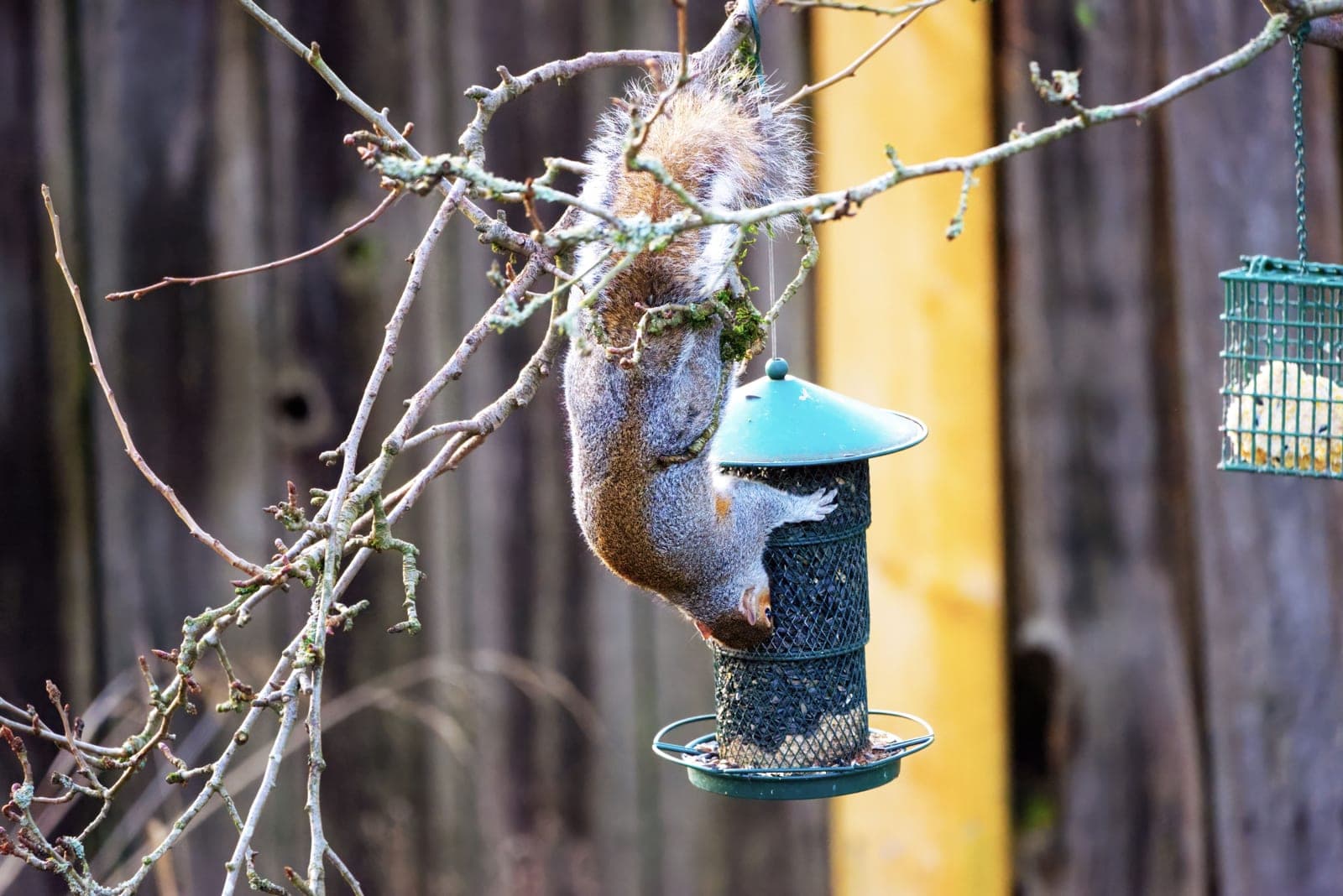
Buy it if squirrels have already cost you a feeder and you want the last one you buy. The mechanism works, but the thing that actually justifies the price is Brome's lifetime care guarantee — they replace chewed parts, which is the entire failure mode of every cheaper feeder. Two things are not in the box: the pole adaptor and the rain guard. And tune the spring, because out of the box it is set to exclude more birds than you probably want.
Winter Perch is funded by affiliate commission. If you buy through a link on this page we may earn a commission at no extra cost to you, and it never decides a ranking. Full disclosure · how we pick.
Quick picks
Ranked, with the trade-off named. Tap a row for the full write-up; the price button goes straight to Amazon.
| # | Product | Best for | Price |
|---|---|---|---|
| 1 |  Brome Squirrel Buster Plus Seed Feeder, 5.1 lbFive pounds of seed, six ports, a cardinal ring for the big birds and the same weight-activated shroud. In winter, the refill interval is the point. | The main winter seed feeder | $129.25 · See it on Amazon |
| 2 |  Brome Squirrel Buster Evolution, double cardinal ringThe same weight-activated shroud as the rest of the Squirrel Buster line, with two cardinal rings, at well under what the Plus costs. If one feeder has to do everything, this is it. | The best price-to-mechanism ratio Brome makes | $73.08 · See it on Amazon |
| 3 |  Brome Squirrel Buster Classic Seed Feeder, 2.4 lbThe same weight-activated shroud in a smaller, cheaper body. Four ports, 2.4 lb, and everything the Plus does except capacity. | Small yards and balconies with a squirrel problem | $79.22 · See it on Amazon |
| 4 | 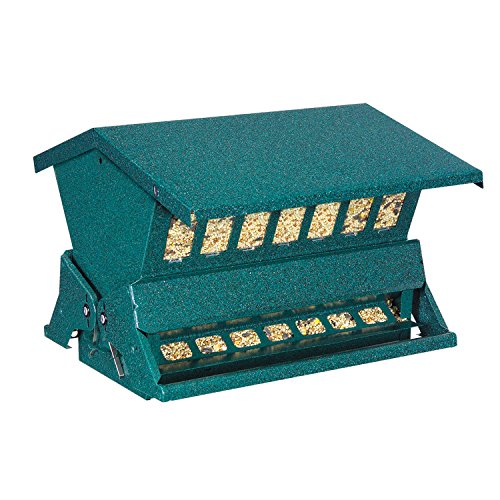 Woodlink Absolute II Squirrel-Resistant Feeder, 12 lbTwelve pounds of seed behind a weight-activated steel shield — the only feeder here you can fill before a storm and forget about until it clears. | The longest refill interval on the page | $84.00 · See it on Amazon |
| 5 |  Brome Squirrel Buster Plus WeatherGuard, 13" ClearThe matched rain guard for the Plus, sold separately and sized to that feeder rather than to the weather — it sheds a vertical downpour and little else. | Keeping rain out of the Squirrel Buster Plus specifically | $34.57 · See it on Amazon |
#ad how we are funded · price as of October 17, 2026
The picks in full
Top pick The main winter seed feeder
Brome Squirrel Buster Plus Seed Feeder, 5.1 lb
Five pounds of seed, six ports, a cardinal ring for the big birds and the same weight-activated shroud. In winter, the refill interval is the point.
Specifications
- Seed capacity
- 5.1 lb
- Ports
- 6
- Height
- 28" base to hanger
- Mechanism
- Weight-activated shroud, adjustable
- Mounting
- Hang or pole (pole adaptor sold separately)
Trade-offs
- 5.1 lb means you refill once a week in a hard winter, not every other day
- The adjustable weight setting excludes grackles as well as squirrels
- The cardinal ring gives perching room to birds a bare port rejects
- Comes fully apart for the cleaning that winter feeders genuinely need
- The pole adaptor is a separate purchase and most buyers do not notice until it arrives
- 28 inches is a big object to hang from a slim branch
- Premium price
Who it is forThe main seed station in a yard where squirrels are a standing problem.
Skip it ifSkip it if you feed one small tube on a balcony. The Squirrel Buster Classic does the same trick in a 2.4 lb body for less.
#ad how we are funded · price as of October 17, 2026
No. 2 The best price-to-mechanism ratio Brome makes
Brome Squirrel Buster Evolution, double cardinal ring
The same weight-activated shroud as the rest of the Squirrel Buster line, with two cardinal rings, at well under what the Plus costs. If one feeder has to do everything, this is it.
Specifications
- Mechanism
- Weight-activated shroud
- Perches
- Double cardinal ring
- Chew-proof
- Metal ports and shroud
Trade-offs
- Weight-activated exclusion is the only approach that reliably stops a determined squirrel
- The cardinal rings give big birds somewhere to stand, which most tube feeders refuse to do
- Metal ports mean a squirrel that fails to get in cannot chew its way in instead
- Brome sells spare parts, so this is a feeder you repair rather than replace
- A mechanism is a thing that can jam; wet seed and grit need cleaning out or the shroud sticks
- Heavier birds can trip the shroud themselves, which some owners find frustrating
- Costs several times what a plain tube feeder costs
- The spring needs adjusting for your local squirrel weight, and that is trial and error
Who it is forA yard with a real squirrel problem and cardinals worth feeding.
Skip it ifSkip it if you have no squirrels. You are paying for a mechanism you do not need and adding a part that can jam in winter.
#ad how we are funded · price as of October 17, 2026
No. 3 Small yards and balconies with a squirrel problem
Brome Squirrel Buster Classic Seed Feeder, 2.4 lb
The same weight-activated shroud in a smaller, cheaper body. Four ports, 2.4 lb, and everything the Plus does except capacity.
Specifications
- Seed capacity
- 2.4 lb
- Ports
- 4
- Mechanism
- Weight-sensitive closure
- Extras
- Seed ventilation, wire mesh for shared feeding
Trade-offs
- Squirrel-proofing at roughly half the size and cost of the Plus
- Seed ventilation matters in winter, when damp seed cakes solid
- Small enough to hang almost anywhere
- 2.4 lb empties fast in a cold snap when birds feed all day
- Four ports means queuing in a busy yard
- No cardinal ring
Who it is forBalconies, small gardens, and second feeders.
Skip it ifSkip it if your yard is busy. Refilling a small feeder daily in January, in the dark, stops being charming by week two.
#ad how we are funded · price as of October 17, 2026
No. 4 The longest refill interval on the page
Woodlink Absolute II Squirrel-Resistant Feeder, 12 lb
Twelve pounds of seed behind a weight-activated steel shield — the only feeder here you can fill before a storm and forget about until it clears.
Specifications
- Seed capacity
- 12 lb
- Dimensions
- 16"W x 11.25"H x 13.5"D
- Material
- Steel
- Mechanism
- Spring-activated perches; a metal shield covers the seed tray under weight
- Perches
- Two counterbalance perches, adjustable to three positions
- Top
- Locking
- Included
- Steel hanging rod; 5 ft sectional pole kit with mounting bracket
- Warranty
- 1 year limited
Trade-offs
- 12 lb is far and away the largest capacity on this page, and capacity is the winter specification
- The counterbalance perches adjust across three settings, so you choose the weight at which the shield closes
- Steel body and a locking top — nothing here for a squirrel to chew through or lift off
- Ships fully assembled with both a hanging rod and a pole kit, so no second purchase to mount it
- Takes mixed seed, sunflower, safflower and peanut halves rather than one narrow seed type
- The most expensive feeder on this page by a wide margin
- The shield is a moving mechanism outdoors all winter, and seed dust and freezing rain are what it has to keep working through
- A 1-year limited warranty is short next to the lifetime cover on some simpler feeders
- Set the perches too light and you exclude cardinals and jays along with the squirrels
- Woodlink publishes no drainage or ventilation detail for the seed tray
Who it is forSomeone running a feeder they cannot top up daily — a second property, a long driveway, or simply a yard where February refills are the thing that defeats them.
Skip it ifSkip it if your yard has no squirrel problem. You are paying mostly for the mechanism, and a plain hopper with a good drainage screen feeds the same birds for a third of the money.
#ad how we are funded · price as of October 17, 2026
Where these specs came from
- Woodlink Absolute II Squirrel Resistant Bird Feeder Model 7536, 12 lb — manufacturer listing, Amazon.com (retrieved 2026-10-10)
- Tractor Supply — Woodlink 12 lb Absolute II Squirrel-Resistant Bird Feeder: 12 lb capacity, 16" x 11.25" x 13.5", steel, locking top, spring-activated perches, two counterbalance perches with three positions, 1-year limited warranty, hanging rod and 5 ft pole kit included
No. 5 Keeping rain out of the Squirrel Buster Plus specifically
Brome Squirrel Buster Plus WeatherGuard, 13" Clear
The matched rain guard for the Plus, sold separately and sized to that feeder rather than to the weather — it sheds a vertical downpour and little else.
Specifications
- Diameter
- 13"
- Material
- UV-protected polycarbonate
- Fits
- Squirrel Buster Plus (model 1024) only — not other Squirrel Buster models
- Part numbers
- 1026 / BD1026 / BRM-1026
- Fitting
- Remove the feeder lid and slide the guard into place
- Included with the feeder
- No — sold separately
Trade-offs
- Designed around this feeder, so it fits the shroud without fouling the mechanism
- Polycarbonate rather than acrylic, which matters because acrylic goes brittle in hard frost
- Clear, so it does not darken ports that are already in short winter light
- Slides on without tools once the lid is off
- Sold separately — the feeder is already premium-priced and this is another third on top
- 13 inches is narrower than the roughly 16 inches this site recommends over a standard seed tube, so wind-driven rain still reaches the ports
- Fits the Plus only; buy the wrong Squirrel Buster and this will not go on it
- Listings disagree slightly on the dimensions, so measure against your feeder before ordering
Who it is forAn owner of the Plus specifically, in a site that takes rain straight down rather than sideways.
Skip it ifSkip it if your feeder sits in an exposed, windy spot. A wider generic dome covers the ports better, and moving the feeder into shelter beats both.
#ad how we are funded · price as of October 17, 2026
Where these specs came from
- Weather Guard for Squirrel Buster Plus bird feeder, feeder not included — manufacturer listing, Amazon.com (retrieved 2026-10-17)
- BestNest — Brome Squirrel Buster Plus WeatherGuard, clear, 13" diameter, polycarbonate construction
- JCS Wildlife — Brome Squirrel Buster Plus WeatherGuard 1026: stated to fit the Squirrel Buster Plus model 1024 only and not other Squirrel Buster models
What this page is and is not
We have not bench-tested this feeder against a population of squirrels and we are not going to pretend otherwise. What follows is built from what Brome publishes, from the design of the mechanism, and from the lens this whole site applies — what happens to a piece of hardware left outdoors through a northern winter. Where a figure is Brome's, we say so and cite it.
The squirrel-proof feeder roundup ranks five mechanisms against each other and puts this one first. This page is the long version for the winner, and it exists because the roundup cannot spend a thousand words on a warranty.
The warranty is the product
Start here, because it is the part that justifies the price and it is the part the listings bury under the mechanism.
Every squirrel-proof feeder fails the same way: a squirrel cannot get the seed, so it chews the thing that is stopping it. Plastic ports, plastic shrouds and plastic lids are consumable in a yard with a determined population. That is why a cheap feeder is not cheap — it is an annual purchase.
Brome publishes two things against that. First, all parts exposed to squirrels are made from chew-proof materials. Second, and more importantly, a lifetime care guarantee: Brome's own position is that they will look after the feeder rather than sell you another one. On a feeder at this price that is not a marketing line, it is the financial argument. A premium feeder that gets repaired is cheaper over five winters than three budget feeders that get chewed and thrown away.
The adjustable spring, which almost nobody touches
The mechanism is simple and it is the right one: weight on the perch pulls a shroud down over the feeding ports. A squirrel weighs enough to close it; a chickadee does not.
What most owners miss is that the spring is adjustable. Brome's patented mechanism lets you set how much weight it takes to close the shroud, and that single setting decides which birds you are feeding. Turned to its most sensitive, it will shut out grackles and starlings — and also jays, grosbeaks and sometimes cardinals, which for a lot of people are the birds the feeder was bought for.
The honest advice is the same one we give about weight mechanisms generally: start at the heaviest setting that still excludes the squirrel, and only work down if you must. A feeder that excludes squirrels and cardinals equally has solved half your problem and created the other half. Bird feeders for cardinals covers that trade-off in full.
Brome's own answer to it is the Cardinal Ring, a patented perching ring that gives heavier, upright-feeding birds somewhere to stand at a feeder whose bare ports would otherwise reject them. It is included on the Plus and it is one of the real differences between this and the cheaper Squirrel Buster models.
What Brome publishes
| Specification | Published figure |
|---|---|
| Seed capacity | 3 quarts, approximately 5.1 lb |
| Feeding ports | 6, plus the Cardinal Ring |
| Dimensions (Brome) | 6.5" x 6.5" x 23.8" |
| Height including hanger | 28" |
| Mechanism | Weight-activated shroud, adjustable spring |
| Materials | Chew-proof on all parts exposed to squirrels |
| Ventilation | Seed Tube Ventilation — vents at the top release humidity and hot air |
| Warranty | Lifetime care guarantee |
| Pole mounting | Adaptor sold separately |
| Rain guard | Sold separately (13 inch WeatherGuard) |
One honest wrinkle: Brome's own dimensions and some retailer listings do not agree — Brome gives 6.5 x 6.5 x 23.8 inches while at least one major retailer lists 8 x 28. The 28 inch figure is the height including the hanger. Measure your hanging spot against the larger number.
Capacity is the winter specification
Five pounds of seed is the quiet reason this feeder suits a northern winter, and it is worth more than the mechanism to a lot of buyers. In January, birds feed from first light to last, and a small feeder empties daily — which is how people end up not refilling it at all.
Against the cheaper Squirrel Busters this is the main difference: the Plus carries roughly double the Classic. If the squirrel problem is solved either way, the extra capacity is what you are actually buying up to. The same argument runs through the tube feeder roundup, where capacity is the first specification for exactly this reason.
Brome also publishes a Seed Tube Ventilation system — vents at the top of the tube that let humid air escape. That is a genuine winter feature rather than a specification-sheet filler, because the failure mode of a full feeder in a wet week is seed caking at the bottom and plugging the lowest ports.
The two things that are not in the box
1. The pole adaptor
The feeder hangs. If you intend to put it on a pole — and on this site's standing advice, a baffled pole is the first thing to try — the adaptor is a separate purchase, and most buyers discover that after the feeder arrives.
Worth saying plainly: if you already run a pole, you may not need this feeder at all. Baffle or squirrel-proof feeder prices both routes, and a baffle on a pole you already own protects every feeder on it for less than one mechanism costs.
2. The rain guard
Brome sells a matched 13-inch WeatherGuard in UV-protected polycarbonate, listed as fitting the Plus (model 1024) and not the other Squirrel Buster models. It slides on once the lid is off.
It is worth knowing that 13 inches is narrower than the roughly 16 inches our weather guard page recommends over a standard seed tube. That is not a defect — it is sized to clear this feeder's shroud rather than to beat the weather — but it means it sheds rain falling straight down and does little about wind-driven rain, which is most winter rain. In an exposed spot, moving the feeder into shelter beats any dome and is free.
Cleaning, and the part that matters in winter
The whole feeder comes apart without tools, which on a mechanism feeder is not a given — and it is the specification that decides whether it actually gets cleaned in January rather than April.
That matters more here than on a plain tube, because this feeder has a shroud, a spring and a cardinal ring in addition to the usual ports and base. More surfaces means more places for damp seed and droppings to collect, and a mechanism gummed with seed dust is a mechanism that stops moving. Cleaning feeders and baths in winter covers the method when there is no hose and nowhere warm to dry anything.
Who should buy something else
What we would skip
Anyone who already owns a feeder pole
A baffle on a pole you already have costs less than this feeder and protects every feeder on that pole, not one. Both routes are priced here, and this is the single most common way to overspend on the squirrel problem.
Anyone feeding one small feeder on a balcony
Five pounds of seed and a 28 inch body is a lot of feeder for a railing. The Squirrel Buster Classic does the same trick in a smaller body for less — feeders for apartments and balconies covers the format question.
Anyone whose main problem is starlings rather than squirrels
You can wind the spring down far enough to exclude them, but you will exclude jays and cardinals at the same time. Starling- and grackle-proof feeders covers the three approaches that actually target birds rather than weight.
Anyone expecting it to stop raccoons
A weight mechanism closes under a squirrel. A raccoon is a different proposition entirely, and the answer there is a tall pole baffle rather than anything the feeder itself can do.
Buying it without budgeting for the extras
Neither the pole adaptor nor the rain guard is in the box, and the feeder is already premium-priced. Decide whether you need either before you compare it against a cheaper rival on price alone.
How we judged it
How we picked
- The published warranty, treated as the main specification rather than a footnote, because chewing is how every feeder in this category actually dies.
- Whether the exclusion mechanism is adjustable, since a fixed one decides for you which birds you are feeding.
- Published seed capacity, because refill interval in February is what decides whether a feeder keeps being filled.
- Whether it comes apart for cleaning without tools, which matters more on a feeder with a shroud and a spring than on a plain tube.
- What is not included — the pole adaptor and the rain guard are both separate purchases and both change the real price.
- Published figures reported as published, including where Brome's dimensions and a retailer's do not agree. We print the disagreement rather than picking one.
- Current availability, checked against the Amazon catalog on the day of writing.
- Live price, refreshed daily and never typed into this page by hand.
We have not tested any of these. What we did instead: read the manufacturers’ own listings, compiled the published specifications, computed the running cost at a cited electricity rate, and refreshed the prices daily. The full method is published.
Questions people actually ask
- Is the Squirrel Buster Plus worth the price?
- If squirrels have already destroyed a feeder, yes — the lifetime care guarantee against chewed parts is the real value, because replacement is how cheaper feeders actually cost you money. If you already own a baffled pole, probably not.
- What is the difference between the Squirrel Buster Plus and the Classic?
- Capacity and the Cardinal Ring. The Plus holds roughly 3 quarts (about 5.1 lb) with six ports and a perching ring for heavier birds; the Classic is a smaller body with fewer ports for less money. Both use the same weight-activated shroud.
- Can you put a Squirrel Buster Plus on a pole?
- Yes, but the pole adaptor is sold separately and is not in the box. If you already own a pole, weigh this feeder against simply fitting a baffle to it, which protects every feeder on that pole.
- Will it keep cardinals and jays off too?
- It can, and that is the thing to tune. The spring is adjustable, so set it at the heaviest setting that still excludes squirrels. The Cardinal Ring exists precisely because a bare weight mechanism rejects the heavier birds many people are feeding.
- Does the Squirrel Buster Plus come with a weather guard?
- No. Brome sells a matched 13-inch polycarbonate WeatherGuard separately, and it fits the Plus only, not the other Squirrel Buster models. At 13 inches it sheds vertical rain but not much wind-driven rain.
- How do you clean a Squirrel Buster Plus?
- It disassembles without tools, which is the point. Clean it more often than a plain tube, because the shroud, spring and cardinal ring add surfaces where damp seed collects — and a mechanism packed with seed dust stops moving.
Sources
- Brome Bird Care — Squirrel Buster Plus product support: dimensions, adjustable weight mechanism, chew-proof materials, Seed Tube Ventilation and Cardinal Ring
- Brome Bird Care store — Squirrel Buster Plus: 5.1 lb seed capacity, 6 feeding ports, Cardinal Ring, lifetime care guarantee
- BestNest — Brome Squirrel Buster Plus WeatherGuard, clear, 13" diameter, polycarbonate
Read next
- The Best Squirrel-Proof Bird Feeders
Weight-activated shrouds, tipping perches and cages, ranked on which mechanism actually excludes a squirrel — plus the placement fix that is free.
- Baffle or Squirrel-Proof Feeder?
Baffle plus pole, or a weight-activated feeder? Both routes costed honestly, including the pole the baffle advice never mentions.
- The Best Tube Bird Feeders for Winter
Capacity, a base that comes off without tools, metal ports and somewhere for water to go — the four specs that decide a winter tube, with five picks ranked on them.
- The Best Bird Feeders for Cardinals
Perch width is the spec that decides whether cardinals use a feeder. Six picks ranked on it, plus the one seed that brings cardinals and repels squirrels.
- Bird Feeder Rain Covers and Weather Guards
Rain guards and weather domes ranked on the one number that decides whether they work, plus the cases where a dome is the wrong fix entirely.