Heated bird baths / Comparison
Bird Bath or Bird Feeder: Which to Add First
If you are adding one thing to your yard this winter, this is the decision. It turns on a single question about your climate, and the answer is not the one the feeder aisle implies.
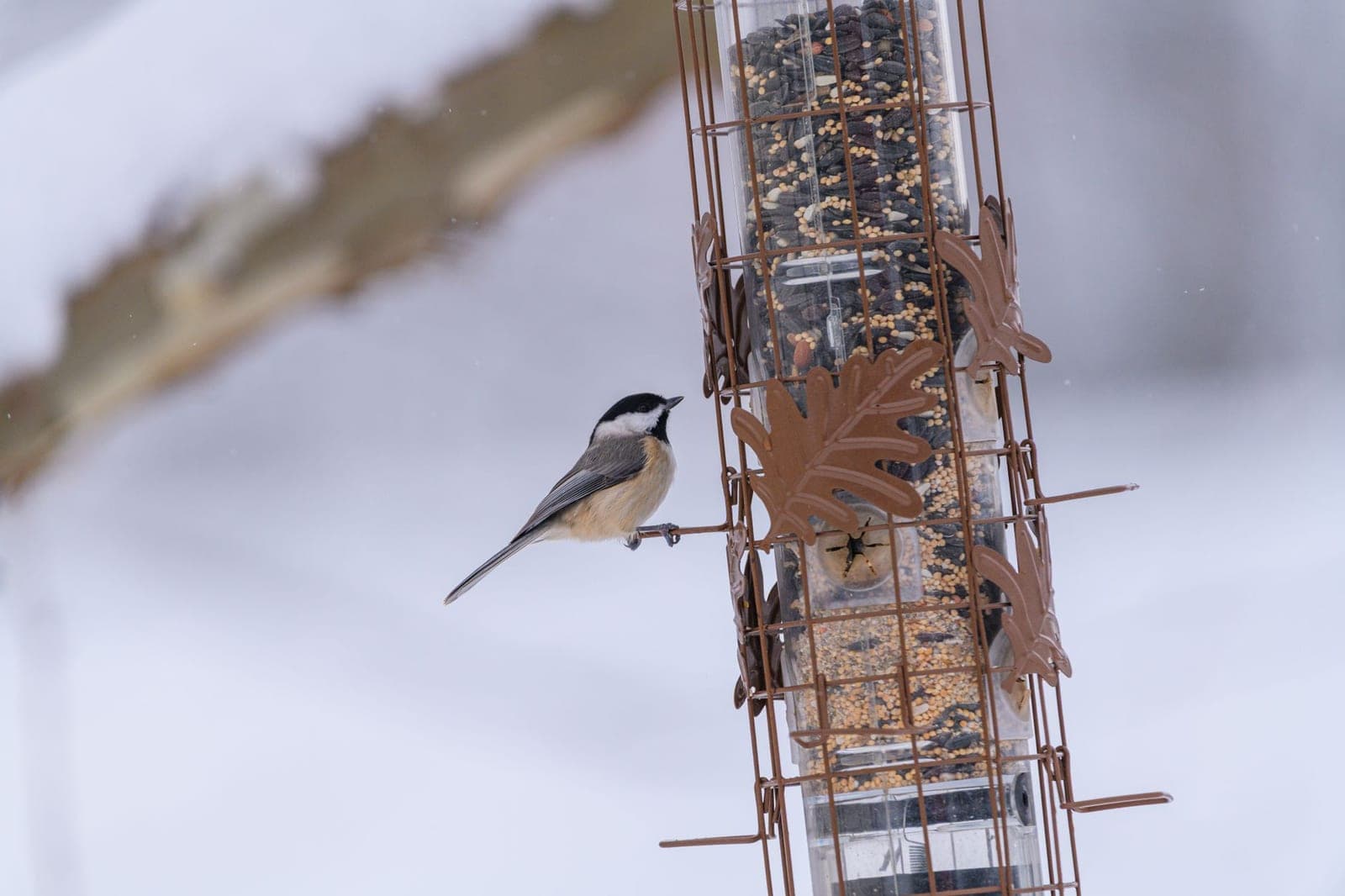
If your water freezes solid for weeks at a time, add the water first. Birds are good at finding winter food and much worse at finding open water, and many birds that never touch a feeder will come to a bath — so open water usually changes your visitor list faster than another feeder does. If your winters are mild, or there is a creek or spring nearby that stays open, add the feeder first: food is then the scarcer thing. A heated bath also needs an outdoor outlet, which decides it for some yards before anything else does.
Winter Perch is funded by affiliate commission. If you buy through a link on this page we may earn a commission at no extra cost to you, and it never decides a ranking. Full disclosure · how we pick.
Quick picks
Ranked, with the trade-off named. Tap a row for the full write-up; the price button goes straight to Amazon.
| # | Product | Best for | Price |
|---|---|---|---|
| 1 |  Farm Innovators HBI-150 Heated Birdbath, 150 WThe one heated bath in this category whose maker puts the wattage on the listing, and it is also the easiest one to lift off and clean. | Deck rails, and anyone who wants a published wattage | Check price on Amazon |
| 2 |  K&H Super Ice Eliminator Bird Bath De-Icer, 80 WThe 50 W unit with enough extra element to cope with a bigger basin and a colder night. If you are buying one de-icer without measuring anything, buy this one. | Most yards, most winters — the default de-icer | Check price on Amazon |
| 3 |  Kingsyard 15" Metal Tube Feeder, 6 PortsAn all-metal body and ports for under twenty dollars, with one real catch: the perch is sized for small birds and is meant to turn larger ones away. | Metal ports at a plastic-tube price | Check price on Amazon |
| 4 |  C&S High Energy Delight No-Melt Suet Dough, 8-packNo-melt dough at a price that lets you leave a cake out permanently, in the formulation woodpeckers, nuthatches and chickadees actually work at. | The default winter cake | Check price on Amazon |
| 5 |  Wagner's 76027 Black Oil Sunflower Seed, 25 lbThin-shelled, high-fat, and eaten by nearly everything that comes to a winter feeder. Black oil sunflower is the correct default and this is the honest bulk bag. | The one seed to run if you only run one | Check price on Amazon |
#ad how we are funded · no live price right now
The picks in full
Top pick Deck rails, and anyone who wants a published wattage
Farm Innovators HBI-150 Heated Birdbath, 150 W
The one heated bath in this category whose maker puts the wattage on the listing, and it is also the easiest one to lift off and clean.
Specifications
- Rated watts
- 150 W
- Water capacity
- 1.5 gallons
- Dimensions
- 5" x 20" x 25"
- Weight
- 5.25 lb
- Mount
- Twist deck mount, hidden electrical connection
- Thermostat
- Internal
Trade-offs
- Publishes a rated wattage, which most of this category does not
- Twist-off dish lifts straight off to dump, scrub and refill
- The electrical connection sits under the dish, so the cord is not draped over your rail
- 1.5 gallons is a real reservoir, not a puddle that boils off in a dry wind
- 150 W is the top of the range here — the K&H de-icer draws a third of that
- Plastic, so it looks like equipment rather than garden furniture
- Deck-mount only; there is no pedestal version of this model
Wattage: 150 W
Farm Innovators states 150 watts, with an internal thermostat so the element only draws when the water is near freezing. At 150 W it is the highest rated draw of any complete bath here, and the thermostat is why that ceiling is rarely the real bill.
At full draw for a four-month winter (120 days), plugged in around the clock: 150 W x 2880 h = 432.00 kWh, x $0.1834/kWh = $79.23 — $79.23 at $0.1834/kWh. A thermostatic unit will land under that.
Who it is forThe established feeder owner adding water to a deck rail they can already reach from an outdoor socket.
Skip it ifSkip it if your bath already exists and you like it. A 50 W de-icer dropped into the bath you own does the same job for less power and less money.
#ad how we are funded · no live price right now
No. 2 Most yards, most winters — the default de-icer
K&H Super Ice Eliminator Bird Bath De-Icer, 80 W
The 50 W unit with enough extra element to cope with a bigger basin and a colder night. If you are buying one de-icer without measuring anything, buy this one.
Specifications
- Rated watts
- 80 W
- Form
- Submersible, natural rock shape
- Control
- Automatic
- Finish
- Paintable enamel
- Safety
- Safety listed for outdoor submersible use
Trade-offs
- 80 W is the sweet spot: enough for a 20-inch basin, well under a 150 W bath
- Automatic, so there is no switch to forget
- Same drop-in convenience as the 50 W, same paintable finish
- Works in the bath you already own, at any mount height
- 60 percent more draw than the 50 W for buyers with a small basin who did not need it
- Still a cord in the water
- The rock shape takes up basin space small birds could be standing in
Wattage: 80 W
K&H states 80 watts, and the listing is explicit that the unit is safety listed and automatic. Eighty watts holds a typical 16 to 20 inch basin open through a normal northern winter night.
At full draw for a four-month winter (120 days), plugged in around the clock: 80 W x 2880 h = 230.40 kWh, x $0.1834/kWh = $42.26 — $42.26 at $0.1834/kWh. A thermostatic unit will land under that.
Who it is forThe default buyer: an existing 16 to 20 inch bath, a normal northern winter, no interest in replacing the bath itself.
Skip it ifSkip it if your basin is under about 14 inches. The 50 W version does that job and costs less to run every single day of the winter.
#ad how we are funded · no live price right now
No. 3 Metal ports at a plastic-tube price
Kingsyard 15" Metal Tube Feeder, 6 Ports
An all-metal body and ports for under twenty dollars, with one real catch: the perch is sized for small birds and is meant to turn larger ones away.
Specifications
- Seed capacity
- Up to 2 lb
- Feeding ports
- 6
- Height
- 15"
- Material
- Metal, anti-rust powder-coated finish
- Ports, lid and base
- Metal, stated chew-resistant
- Perch
- 1.7", stated to suit finches and chickadees and to discourage larger birds
- Seed
- Stated to suit sunflower, safflower, milo, millet, thistle and peanuts
Trade-offs
- Metal ports, lid and base at a price where everything else is plastic
- Six ports and 2 lb is a genuinely usable winter combination
- Powder-coated rather than bare steel, which is what rusts at the ports first
- Takes thistle as well as sunflower, so it covers the finch case without a second feeder
- The 1.7 inch perch is deliberately short — cardinals, jays and grosbeaks are designed out, not accommodated
- No roof or weather guard, and no drainage detail is published
- Kingsyard is an Amazon-native brand with no warranty figure we could find
- Metal conducts, so the ports ice up as readily as anything else here
Who it is forSomeone feeding chickadees, finches and nuthatches who wants the squirrel-chewing problem solved at the port without paying for a mechanism.
Skip it ifSkip it if cardinals are the point of your feeder. The short perch is the design, not a flaw, and no cardinal is going to use it comfortably.
#ad how we are funded · no live price right now
No. 4 The default winter cake
C&S High Energy Delight No-Melt Suet Dough, 8-pack
No-melt dough at a price that lets you leave a cake out permanently, in the formulation woodpeckers, nuthatches and chickadees actually work at.
Specifications
- Format
- Standard 11.75 oz cake
- Pack
- 8
- Type
- No-melt dough
- Targets
- Woodpeckers, nuthatches, chickadees
Trade-offs
- No-melt dough holds shape above freezing, so an early thaw does not dump it on the ground
- Standard cake size fits every cage feeder on this site
- Eight cakes is roughly a winter for one feeder
- Plain high-fat formulation with nothing gimmicky in it
- No-melt dough is firmer than raw suet and slower going for small birds in deep cold
- Nothing in it deters squirrels or starlings
Who it is forThe first suet you buy, and the one you re-order without thinking about it.
Skip it ifSkip it if starlings have found your feeder. A plain cake in an open cage is a starling buffet — go to an upside-down feeder or a hot pepper cake.
#ad how we are funded · no live price right now
No. 5 The one seed to run if you only run one
Wagner's 76027 Black Oil Sunflower Seed, 25 lb
Thin-shelled, high-fat, and eaten by nearly everything that comes to a winter feeder. Black oil sunflower is the correct default and this is the honest bulk bag.
Specifications
- Type
- 100% black oil sunflower
- Bag
- 25 lb
- Shell
- Thin — accessible to small bills
- Origin
- Made in USA
Trade-offs
- Thin shells mean chickadees and finches can open it, not just cardinals
- The highest usable fat of the common feeder seeds
- 25 lb is a real winter's supply for one or two feeders
- No filler — no milo, no wheat, no red millet nobody eats
- Shells pile up under the feeder and kill the grass beneath it
- 25 lb needs a sealed bin or you are feeding mice
- Sunflower is squirrel candy
Who it is forEvery winter feeder yard, as the base seed.
Skip it ifSkip the 25 lb bag if you feed one small tube on a balcony. Seed goes stale and moldy long before you finish twenty-five pounds.
#ad how we are funded · no live price right now
How we judged this
How we picked
- Scarcity, not popularity. The question we asked is which resource your landscape stops providing in a freeze, which is why this page leans on published expert statements about food and water availability rather than on what sells.
- Both sides sourced. The pro-water case is quoted from named experts; the counter-case — that birds manage on snow and ice at an energy cost — is quoted from BirdNote and stated just as plainly.
- Climate treated as the deciding variable, so the answer flips for mild-winter readers rather than being presented as universal.
- Practical prerequisites included. A heated bath needs a GFCI outdoor outlet; that rules the water route out for some yards regardless of the biology.
- Running costs linked, not re-litigated — the electricity arithmetic and the seed arithmetic each have their own page on this site, published with the formula.
- Every pick confirmed currently purchasable against the Amazon catalog on the day of writing, with live prices from the daily refresh.
We have not tested any of these. What we did instead: read the manufacturers’ own listings, compiled the published specifications, computed the running cost at a cited electricity rate, and refreshed the prices daily. The full method is published.
Why water usually wins
The useful version of this argument does not come from us. Kenn and Kimberly Kaufman, writing for Birds & Blooms, put it plainly: "Unless there's persistent and heavy snow cover, birds are quite adept at finding natural sources of food." But "finding open water is more of a challenge." Their own yard runs a bath heater all winter.
That asymmetry is the whole case. In a freeze, seed is still seed — it sits under snow, in weed heads, in bark crevices, in your neighbor's feeder — and a bird that works hard enough will find calories. Standing water does not behave that way. It is either liquid or it is not, and across a hard freeze most of a landscape is not.
The same article notes something that matters for anyone who already runs feeders and wonders why their list has stopped growing: many birds that rarely visit feeders will still stop at a heated bath. Feeders select for seed and suet eaters. Water does not select at all — everything drinks.
The honest counter-argument
A page that only quoted the pro-water case would be selling, not advising. Here is the other side, and it is real.
Birds survive winters without your bath, and they always have. BirdNote's account of how they do it is worth reading in full: Cedar Waxwings catch snowflakes in flight, Black-capped Chickadees drink meltwater off icicles, and Red-breasted Nuthatches, Pileated Woodpeckers and Bohemian Waxwings scoop powdery snow. Northern Flickers hammer the icy crust and eat the chips. As BirdNote puts it, "It takes energy to convert ice and snow to water and warm it up to the body temperature of a bird" — so there is a cost, and the birds pay it rather than dying of thirst.
So the accurate claim is not that birds need your water to live. It is that open water is a genuine saving on a tight energy budget, in a season when the budget is the whole problem, and that the saving is largest exactly where the freeze is hardest.
Worth noting too that Audubon's own winterizing guide lists water second among nine jobs — alongside planting, mulch, brush piles and window safety — and does not rank them. We are the ones ranking. Our reason for putting water at the top in a cold climate is the scarcity asymmetry above, and in a mild climate we do not.
The two routes, side by side
| Open water | A feeder | |
|---|---|---|
| What it costs to start | A heated bath, or a de-icer if you own a basin | A feeder plus the first bag of seed |
| What it costs to keep running | Electricity, published here with the formula | Seed and suet, the arithmetic here |
| Who it reaches | Everything that drinks, including birds that ignore feeders | Seed and suet eaters |
| What it needs from your yard | A GFCI outdoor outlet in cord reach | A pole, hook or rail, and clearance from squirrel launch points |
| Weekly work | Scrub and refill; it grows algae precisely because it is warm | Refill; clean every couple of weeks |
| Scarcity in a freeze | High — liquid water is the thing the landscape stops providing | Moderate — natural food is harder to reach but still there |
| How it fails | Ice, if the element is underpowered for the basin | Empty, or taken over by squirrels and starlings |
Neither column is expensive compared with the other. The deciding factors are your climate and whether you have an outdoor outlet — not price.
The rule, stated as a rule
- Does standing water in your yard freeze solid for days at a stretch? If yes, water first. That is the condition the whole argument rests on.
- Is there open water nearby all winter — a spring, a fast creek, a lake outlet, a neighbor who runs a heated bath? If yes, your marginal contribution is food. Feeder first.
- Do you have a GFCI-protected outdoor outlet within reach of a proper outdoor cord? If not, water is a bigger project than it looks, and the no-electricity methods are honestly worse. Start with the feeder and solve the power separately.
- Are you already running feeders and seeing the same six species? Add water. It is the step most yards skip, and the first thing we suggest when a feeder goes quiet.
If water is the answer, which water
Two routes, and the one you want depends on whether you already own a bath.
- You own a plastic or metal bath: buy a de-icer and drop it in. Cheapest route, lowest draw, and the basin already suits your yard.
- You own a concrete or unglazed ceramic bath: buy a complete heated bath and turn the stone one over for the season. Porous stone absorbs water, and absorbed water spalls the surface when the power drops.
- You own no bath: buy a complete heated bath, matched to where you can mount it — deck rail, stand or ground level.
Heated bath against de-icer prices that decision properly, including the concrete case that flips it. Whichever you pick, keep the water shallow — an inch at the edge, two at the center — and plan on topping up often, because dry winter air evaporates a bath faster than people expect. Audubon makes the same point: "Frequent refills are necessary in winter because the water quickly evaporates in dry air."
If food is the answer, which food
Start with fat, not with a mixed bag. Suet carries roughly twice the energy per gram of carbohydrate, which is why suet beats seed in cold weather — but it only reaches birds that can cling to a cage, so the standard honest answer is one of each: a suet feeder and a seed feeder holding straight black oil sunflower.
What not to buy is more useful than what to buy here. Skip the cheap mixed bags: they are padded with milo, wheat and red millet, which almost nothing at a northern feeder eats, and the rejected filler rots on the ground and draws rodents. The winter seed roundup ranks the options on usable fat per pound, and the feeder roundup ranks feeders on the capacity that decides whether you keep filling them in February.
The real answer is both, in order
Nobody who feeds birds stops at one purchase, and the sequencing question is only interesting for a season or two. The complete setup this site keeps describing is three feeders, open water and cover within about ten feet — laid out here.
What the order buys you is the fastest visible result for the least money, and in a cold climate that is water. The thing nobody tells you is that it is also the easiest part to get wrong: a bath too deep, in the open where cats can work it, with a cord improvised from an indoor extension lead, is worse than no bath. Siting and safety is a ten-minute read before you spend anything.
What we would skip
What we would skip
A heated bath with no outdoor outlet in reach
An indoor extension cord run out through a window is the one genuinely dangerous thing in this hobby. Outdoor power done properly first, bath second.
A solar bath as the water answer in a freeze
Solar moves water; it does not heat it meaningfully, and output collapses in the short overcast days when you need it. The honest answer on solar.
A bird bath at ground level in a yard with cats
A drinking bird at ground level with its attention on the water is the easiest possible target. Raise the water, or put the low bath in the open with no launch cover nearby.
A cheap mixed seed bag as your first food purchase
Milo, wheat and red millet get kicked out and rot underneath, which draws rodents and teaches you that feeding birds is messy. Straight black oil sunflower instead.
Buying both at once on a tight budget
Buy the one your climate says, run it for a season, and learn your yard. A bath and three feeders bought in one week is how people end up with a feeder they never fill.
Questions people actually ask
- Do birds need water in winter?
- They need water, but they do not need yours to survive — they eat snow and drink icicle melt. BirdNote's point is that converting ice to body-temperature water costs energy, so open water is a real saving in the season when energy is the problem.
- Is a bird bath or a bird feeder better in winter?
- In a hard-freeze climate, the bath — birds find food more easily than they find open water, and a bath reaches species that ignore feeders. In a mild climate, the feeder, because water stays available naturally.
- Will a heated bird bath attract more birds than a feeder?
- Often it will add more new species, because every bird drinks and only some eat seed. It will not usually produce more total traffic than a well-stocked seed feeder.
- Can I just put out a bowl of warm water each morning?
- You can, and it works for an hour or two. Water poured at dawn in bitter weather is ice by mid-morning, which is why the no-electricity methods are ranked by whether they deliver water overnight — most do not.
- What should I buy first if I have no outdoor outlet?
- The feeder. Then solve the power question properly rather than improvising: a GFCI-protected outdoor circuit and a cord rated for outdoor use is the prerequisite for everything on the water side.
- Do I need both a feeder and a bath eventually?
- If you want a full winter yard, yes — the complete setup is three feeders, water and cover. The order in this page is about which single purchase does the most first.
Sources
- Birds & Blooms (Jill Staake), quoting Kenn and Kimberly Kaufman — birds are adept at finding natural food but open water is more of a challenge; many birds that rarely visit feeders will stop at a heated bath
- BirdNote, "Why Birds Eat Snow" (December 2025) — species that eat snow and drink icicle melt, and the energy cost of converting ice and snow to body-temperature water
- Audubon, "Winterize Your Yard for Birds" (Steve Kress) — many kinds of birds bathe in and drink from open water in frigid weather; avoid ceramic baths, which can crack; frequent refills are necessary because water evaporates in dry air
Read next
- Heated Bird Bath vs De-Icer: Which One You Need
Complete heated bath or drop-in de-icer? The decision in one table, plus the concrete-basin case that changes the answer.
- What a Heated Bird Bath Actually Costs to Run
Watts to kilowatt-hours to dollars, at the current US average residential rate — the table nobody else in this category publishes.
- How to Set Up a Winter Bird Feeding Station
The complete winter station: feeders, water and cover, with the distances and the order to build it in.
- What It Costs to Feed Birds for a Winter
60 pounds a year is the published average household figure; a three-feeder winter station goes through that in weeks. The arithmetic, the five cost drivers, and the cheapest honest way to feed a winter.
- Why Birds Are Not Coming to Your Feeder
Eight causes ranked by how often they are actually the problem, the two-week rule for testing any change, and the six fixes worth buying.