Winter feeding / Data
What It Costs to Feed Birds for a Winter
Nobody publishes the number because it depends on your yard. What can be published is the arithmetic, the two figures worth anchoring on, and where the money actually leaks.
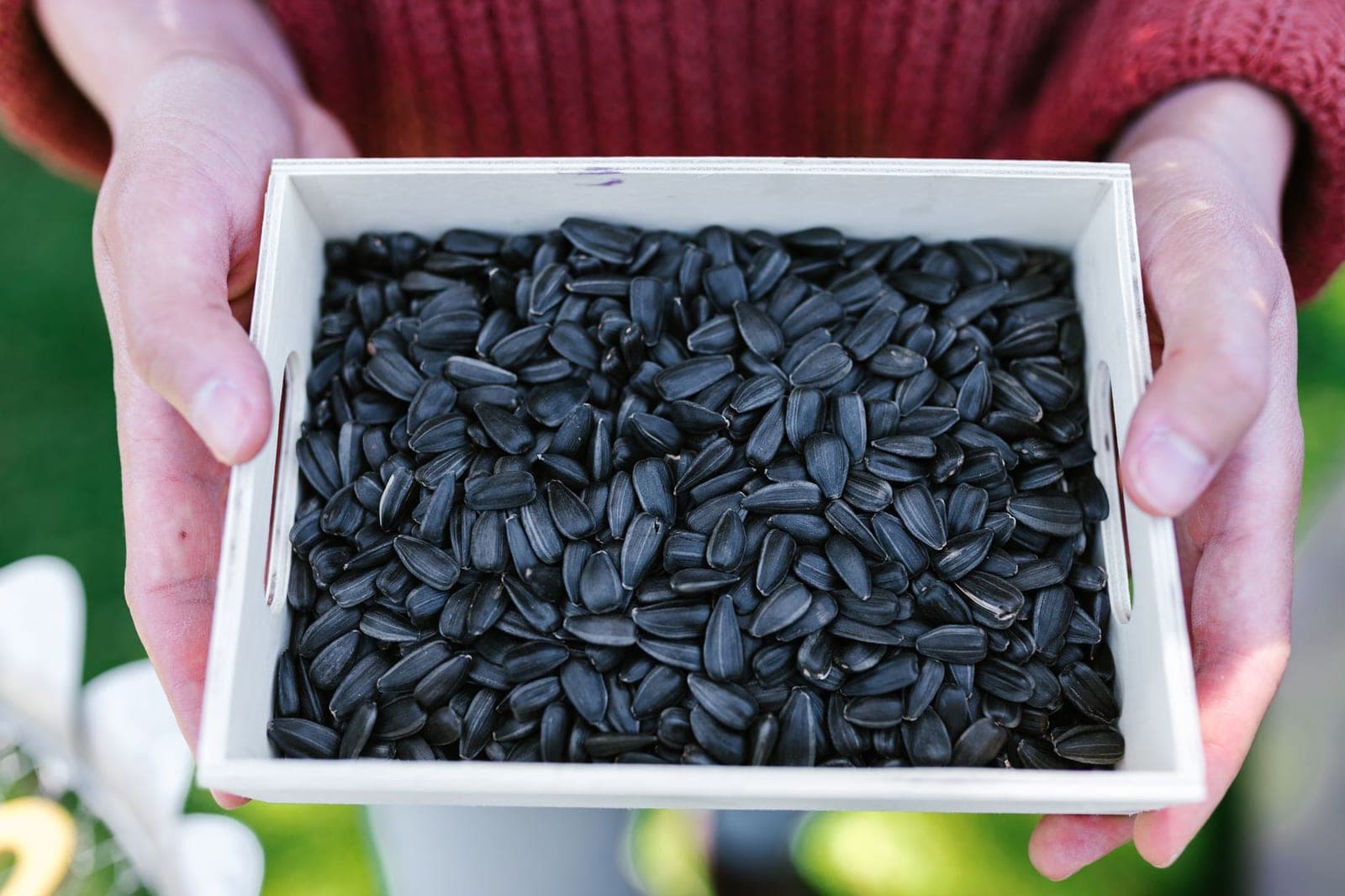
The published anchor: one in three North American households puts out an average of about 60 lb of feed a year, while "dedicated bird feeders buy hundreds of pounds of feed each winter" — UNH Extension's figures, not ours. A single 2 lb tube refilled twice a week gets through roughly 48 lb across a 12-week freeze, so a three-feeder station lands in the hundreds. The arithmetic that gives you your number is one line: feeder capacity x refills per week x weeks of winter.
Winter Perch is funded by affiliate commission. If you buy through a link on this page we may earn a commission at no extra cost to you, and it never decides a ranking. Full disclosure · how we pick.
Quick picks
Ranked, with the trade-off named. Tap a row for the full write-up; the price button goes straight to Amazon.
| # | Product | Best for | Price |
|---|---|---|---|
| 1 |  Wagner's 76027 Black Oil Sunflower Seed, 25 lbThin-shelled, high-fat, and eaten by nearly everything that comes to a winter feeder. Black oil sunflower is the correct default and this is the honest bulk bag. | The one seed to run if you only run one | Check price on Amazon |
| 2 |  C&S High Energy Delight No-Melt Suet Dough, 8-packNo-melt dough at a price that lets you leave a cake out permanently, in the formulation woodpeckers, nuthatches and chickadees actually work at. | The default winter cake | Check price on Amazon |
| 3 |  Wagner's 52023 Black Oil Sunflower Seed, 5 lbThe small bag. Costs the most per pound and is the right purchase for a single small feeder, because seed that goes stale is not cheap at any price. | Balconies, small tubes, and finding out whether you will keep this up | Check price on Amazon |
| 4 |  Pennington Select Safflower Seed, 15 lbStraight white safflower from a mainstream seed brand, in the size a yard that has adopted safflower actually gets through. This is the buy after a small bag has proved the birds take it. | The main bag once you know safflower works | Check price on Amazon |
| 5 |  Kaytee Ultimate No Mess Wild Bird Seed, 9.75 lbEvery seed pre-hulled, so nothing accumulates underneath. The right answer over a deck or a path, and the wrong one if you are buying on price per pound. | Decks, patios and balconies where hulls are not welcome | Check price on Amazon |
#ad how we are funded · no live price right now
The picks in full
Top pick The one seed to run if you only run one
Wagner's 76027 Black Oil Sunflower Seed, 25 lb
Thin-shelled, high-fat, and eaten by nearly everything that comes to a winter feeder. Black oil sunflower is the correct default and this is the honest bulk bag.
Specifications
- Type
- 100% black oil sunflower
- Bag
- 25 lb
- Shell
- Thin — accessible to small bills
- Origin
- Made in USA
Trade-offs
- Thin shells mean chickadees and finches can open it, not just cardinals
- The highest usable fat of the common feeder seeds
- 25 lb is a real winter's supply for one or two feeders
- No filler — no milo, no wheat, no red millet nobody eats
- Shells pile up under the feeder and kill the grass beneath it
- 25 lb needs a sealed bin or you are feeding mice
- Sunflower is squirrel candy
Who it is forEvery winter feeder yard, as the base seed.
Skip it ifSkip the 25 lb bag if you feed one small tube on a balcony. Seed goes stale and moldy long before you finish twenty-five pounds.
#ad how we are funded · no live price right now
No. 2 The default winter cake
C&S High Energy Delight No-Melt Suet Dough, 8-pack
No-melt dough at a price that lets you leave a cake out permanently, in the formulation woodpeckers, nuthatches and chickadees actually work at.
Specifications
- Format
- Standard 11.75 oz cake
- Pack
- 8
- Type
- No-melt dough
- Targets
- Woodpeckers, nuthatches, chickadees
Trade-offs
- No-melt dough holds shape above freezing, so an early thaw does not dump it on the ground
- Standard cake size fits every cage feeder on this site
- Eight cakes is roughly a winter for one feeder
- Plain high-fat formulation with nothing gimmicky in it
- No-melt dough is firmer than raw suet and slower going for small birds in deep cold
- Nothing in it deters squirrels or starlings
Who it is forThe first suet you buy, and the one you re-order without thinking about it.
Skip it ifSkip it if starlings have found your feeder. A plain cake in an open cage is a starling buffet — go to an upside-down feeder or a hot pepper cake.
#ad how we are funded · no live price right now
No. 3 Balconies, small tubes, and finding out whether you will keep this up
Wagner's 52023 Black Oil Sunflower Seed, 5 lb
The small bag. Costs the most per pound and is the right purchase for a single small feeder, because seed that goes stale is not cheap at any price.
Specifications
- Type
- 100% black oil sunflower
- Bag
- 5 lb
- Shell
- Thin
- Origin
- Made in USA
Trade-offs
- Gets used before it stales in a low-traffic yard or a balcony feeder
- No storage problem — it fits in a cupboard
- The sensible way to test whether feeding birds is something you will actually keep doing
- By far the most expensive per pound of the Wagner's sizes
- A busy yard will empty it in under two weeks
Who it is forA single small feeder, a balcony, or a first bag.
Skip it ifSkip it once you know you are committed and have dry storage. You are paying a large premium per pound for a bag size you have outgrown.
#ad how we are funded · no live price right now
No. 4 The main bag once you know safflower works
Pennington Select Safflower Seed, 15 lb
Straight white safflower from a mainstream seed brand, in the size a yard that has adopted safflower actually gets through. This is the buy after a small bag has proved the birds take it.
Specifications
- Size
- 15 lb
- Contents
- Straight safflower seed
Trade-offs
- Fifteen pounds is the realistic middle size, cheaper per pound than a 5 lb bag without committing to a sack
- Straight safflower rather than a mix, so nothing in the bag draws back the birds you are trying to exclude
- Widely stocked brand, which usually means fresher turnover than an obscure listing
- Hard white shell keeps better in storage than oily seed does
- Costs more per pound than black oil sunflower, for a seed fewer species eat
- Paper sack rather than a resealable bag, so it wants decanting into a sealed bin
- Traditional white safflower has a thick hull, which small-billed birds work harder at than the golden hybrid
- No published oil or protein figures on the listing, so you are buying the grade rather than a spec
Who it is forA yard where safflower has already been tried and the cardinals took it.
Skip it ifSkip it as a first purchase. Safflower is the one seed where a yard either accepts it or ignores it, and 15 lb is a lot of seed to find that out with.
#ad how we are funded · no live price right now
Where these specs came from
No. 5 Decks, patios and balconies where hulls are not welcome
Kaytee Ultimate No Mess Wild Bird Seed, 9.75 lb
Every seed pre-hulled, so nothing accumulates underneath. The right answer over a deck or a path, and the wrong one if you are buying on price per pound.
Specifications
- Type
- Hull-free blend
- Bag
- 9.75 lb
- Hulls
- None — 100% edible
- Waste
- No shell debris under the feeder
- Targets
- Cardinals, finches, chickadees, nuthatches, woodpeckers, juncos
Trade-offs
- Nothing to sweep up, which is the entire point over a deck, a patio or a path
- 100% edible means you are not paying to ship and then dispose of shells
- No hulls also means no seed hull mat killing the grass under the feeder
- Broad species appeal, unlike the single-seed options here
- Considerably more expensive per pound than sunflower in the shell
- Hulled seed absorbs moisture faster and spoils sooner once it is damp — a real issue in a wet winter
- Because nothing is discarded, squirrels and starlings get full value from every beakful too
- 9.75 lb goes faster than the weight suggests, since none of it is shell
Who it is forFeeders over a deck, patio, balcony or path, where the mess under the feeder is the deciding factor.
Skip it ifSkip it if your feeder hangs over lawn or a border and you do not mind the hulls. You are paying a real premium purely for tidiness, and a wet week will spoil it faster than shelled seed.
#ad how we are funded · no live price right now
How we worked this out
How we picked
- Household figures from a non-commercial published source — UNH Extension — quoted rather than paraphrased, because every commercial estimate we found had seed to sell.
- Feeder capacities from manufacturer listings, which is what makes the refill table arithmetic rather than opinion.
- No invented consumption rate. We do not claim to know how fast your feeder empties; the table gives three refill rates and you pick the row that matches your yard.
- Seed-price history dated explicitly. The 2021 drought figures are labeled as 2021 and are included to show what moves the price, not to describe today's shelf.
- No dollar total typed into the page. Prices come from the live price layer, refreshed daily, so the arithmetic here stays true after publication.
- Every pick confirmed currently purchasable against the Amazon catalog on the day of writing.
We have not tested any of these. What we did instead: read the manufacturers’ own listings, compiled the published specifications, computed the running cost at a cited electricity rate, and refreshed the prices daily. The full method is published.
The two figures worth anchoring on
UNH Extension publishes the only household-level numbers we could find from a non-commercial source, and they are useful precisely because they are so far apart:
- "Each year in the United States, Americans spend more than one-half billion dollars feeding birds."
- "One in three North American households makes available an average of 60 pounds of supplemental feed annually."
- "Dedicated bird feeders buy hundreds of pounds of feed each winter."
Sixty pounds a year against hundreds of pounds in one winter is a spread of roughly five to ten times, and that spread is the honest answer to "what does it cost". The variable is not the price of seed. It is how many feeders you run and how fast they empty. Which is good news, because both of those are things you choose.
The arithmetic
There is no trick to it. Two lines, and you need one number off your own feeder:
Published capacities for feeders this site recommends, to show the range: a small metal tube holds about 2 lb, a Squirrel Buster Classic 2.4 lb, a Brome Mega 600 4 lb, a Squirrel Buster Plus 5.1 lb, and a large cedar hopper 6 quarts. The spread matters more than anything on the price label, because capacity is what decides whether you are refilling weekly or daily in the dark.
| Feeder capacity | Refilled weekly | Refilled twice a week | Refilled every other day |
|---|---|---|---|
| 2 lb (small tube) | 24 lb | 48 lb | 84 lb |
| 2.4 lb (compact squirrel-proof) | 29 lb | 58 lb | 101 lb |
| 4 lb (mid-size tube) | 48 lb | 96 lb | 168 lb |
| 5.1 lb (large squirrel-proof) | 61 lb | 122 lb | 214 lb |
Read the first column against UNH's 60 lb annual average and the picture is clear: one small feeder, refilled weekly, is roughly what the average feeding household does across a whole year. Everything above that line is a choice to run a bigger operation.
Two refinements worth making. Winter raises the refill rate — birds feed from first light to last and natural food is harder to reach, so your summer interval is not your January interval. And a 12-week freeze is a short winter in the northern tier; if your hard weather runs from November through March, that is about 20 weeks rather than 12 — scale the whole table by about 1.7.
The five things that move your real bill
- How many feeders you run. This is the biggest multiplier by a distance, and it is the one people forget when they add a second feeder "to spread the birds out".
- What you fill them with. Nyjer costs the most per pound here and reaches the fewest species; straight black oil sunflower reaches the most for the least. Hull-free blends cost a real premium per pound — bought for a reason, which is mess rather than nutrition.
- Spill and waste. Seed on the ground is money on the ground, and a mixed bag padded with milo is seed you are paying to have kicked out. Catchers and no-mess feeding attack this from the hardware side.
- Squirrels, starlings and grackles. A squirrel can empty a tube in an afternoon and a starling flock can empty one faster. If either has your yard, you are not buying bird food — you are buying squirrel food, and no bag size fixes that. The squirrel decision is a cost decision.
- Spoilage. Seed in a paper sack in a damp garage goes moldy, and moldy seed is not merely wasted but actively harmful. A sealed bin is the cheapest insurance in this hobby.
Why bird seed costs what it does
This is the part most buyers find genuinely surprising: bird feeding is roughly half the sunflower market, so your seed bill is tied to a farm crop rather than to a food brand's pricing.
Audubon reported the mechanism during the 2021 drought, and the figures are worth reading as history rather than as today's prices. In that year, a North Dakota State University crop economist expected yields down 40 to 50 percent, farmers planted about a quarter fewer sunflower acres, and the farm price of oil-type sunflower rose from $16.60 to $31.40 per hundred pounds year over year. Wholesale white proso millet more than doubled. Those are 2021 numbers and they are not current — the point is the sensitivity, not the figure.
Two practical consequences. First, a dry summer in the Dakotas shows up in your February seed bill, which is an argument for buying the biggest bag you can store dry when prices are good. Second, when prices spike, blends get reformulated with less sunflower and more filler — so a bag that looks like the same price may not be the same seed. Check the mix, not the label.
The cheapest honest way to feed a winter
Not the cheapest possible — the cheapest that still does the job the birds need. Four decisions, in order of how much they save:
- Buy straight black oil sunflower, in the biggest bag you can keep dry. Per pound, bigger is cheaper and it is not close, and black oil reaches more species per dollar than anything else on the shelf. Why the thin shell decides it.
- Add suet rather than a second seed feeder. Fat carries about twice the energy per gram of carbohydrate, so a suet cake is the densest calories you can put out — and it reaches woodpeckers, nuthatches and creepers that a seed feeder never will. Suet against seed in cold weather.
- Stop paying for filler. The cheap bags are cheap because of the milo, wheat and red millet in them, which almost nothing at a northern feeder eats. A "more expensive" bag of straight sunflower is usually cheaper per pound of seed actually eaten.
- Solve the squirrel problem before you buy more seed. Geometry is free: ten feet of clearance and a baffled pole does more for your bill than any seed choice. Baffle or mechanism, priced.
And one thing that is free: leave the seedheads and the brush pile alone. Coneflower, sunflower, grasses and a corner of untidy brush are food and shelter you already own, and the winter yard checklist treats not-tidying as a job in its own right.
Where people waste money
Four leaks, in rough order of how much they cost over a winter.
- Small bags, bought often. The per-pound premium on a 5 lb sack against a 25 lb sack is large, and the only good reason to pay it is that you genuinely cannot store the bigger one dry.
- Feeding squirrels by accident. See above. This is the single biggest leak in a yard that has them.
- Hulled or hull-free seed in an exposed feeder. The shell is packaging, and packaging keeps things fresh. Hulled sunflower absorbs moisture directly, cakes and spoils far sooner — worth paying for over a patio, wasteful in the open.
- Buying a cheap feeder twice. A feeder that comes apart in the cold, or gets chewed through, is an annual purchase. Cheap feeders done properly is about which cheap ones survive.
What this page deliberately does not do
It does not print a dollar total for a winter. Seed prices move with the crop, bag sizes differ, and the number of feeders is yours — so a total typed into this page today would be wrong by February and we would not know it. The buy buttons above carry today's live prices, refreshed daily, and the formula turns them into your number. That is the honest version of this calculation, and it is the same approach the electricity page takes for heated baths.
What we would skip
What we would skip
Cheap mixed bags with milo, wheat or red millet
You are paying for weight that gets kicked to the ground, where it rots and draws rodents. White proso millet is a different seed and ground feeders do eat that.
A 50 lb sack with nowhere dry to keep it
Cheapest per pound and worthless if it molds. Either buy a sealed bin in the same order, or buy smaller bags more often and accept the premium.
Nyjer as a first or main seed
Most expensive per pound here, reaches finches and very little else, needs its own fine-port feeder and spoils faster than sunflower. An excellent second feeder, a poor place to start.
Switching seed to solve a squirrel problem
Safflower genuinely helps in some yards and is not a mechanism. If squirrels are emptying your feeders, fix the geometry and the hardware — the two routes priced — before you re-engineer what you are buying.
Stopping feeding in February to save money
Late winter and early spring are the leanest weeks of the year, after the natural food is gone and before the insects return. If the budget has to give, run fewer feeders rather than stopping.
Questions people actually ask
- How much does it cost to feed birds for a winter?
- It depends almost entirely on how many feeders you run. UNH Extension's published figures put the average feeding household at about 60 lb of feed a year, while dedicated feeders buy hundreds of pounds each winter. One small tube refilled weekly for 12 weeks is about 24 lb; a three-feeder station is several times that.
- How long does a bag of bird seed last?
- Divide the bag weight by your feeder's capacity to get the number of fills, then divide by how often you refill. A 25 lb bag is about twelve fills of a 2 lb tube — six weeks at twice a week, or between three and four weeks at every other day.
- How much bird seed do I need for a winter?
- Use capacity x refills per week x weeks. For a single 2 lb feeder refilled twice a week across a 12-week freeze, that is 48 lb. Scale up by about 1.7 if your hard weather runs November through March, which is roughly 20 weeks rather than 12.
- Why is bird seed so expensive?
- Because it is a farm crop, and bird feeding is roughly half the sunflower market. Audubon's reporting on the 2021 drought showed farm prices for oil-type sunflower nearly doubling year over year when the harvest failed — those figures are historical, but the sensitivity is permanent.
- What is the cheapest bird seed that is actually worth buying?
- Straight black oil sunflower in the largest bag you can store dry. It reaches the most species per dollar, and the cheap mixed bags are cheap because of filler that northern feeder birds will not eat.
- Is suet or seed better value in winter?
- Suet is denser calories — roughly twice the energy per gram — but only reaches birds that can cling to a cage. The cost-effective winter setup is one of each rather than two seed feeders. The full argument.
Sources
- UNH Extension, "For the Birds: Bird Feeding Tips" — Americans spend more than one-half billion dollars a year feeding birds; one in three North American households makes available an average of 60 pounds of supplemental feed annually; dedicated bird feeders buy hundreds of pounds each winter
- Audubon, "Feeding Birds Could Get Pricey This Year" (Andy McGlashen, September 2021) — bird feeding is about half the sunflower market; 2021 North Dakota yields expected down 40 to 50 percent; farm price of oil-type sunflower $16.60 to $31.40 per hundredweight; white proso millet wholesale more than doubled
Read next
- The Best Bird Seed for Winter
Five winter seeds ranked on usable fat, shell thickness and species reach — plus the cheap mix that is worth avoiding.
- Black Oil Sunflower Seed: Why It Is the Default
Black oil against striped and hulled sunflower, why the thin shell decides it, and which bag size is genuinely cheapest.
- The Best Bird Seed Storage Containers
Galvanized cans against airtight bins, ranked on which winter threat each one stops — rodents, raccoons or damp — plus where to put the container so it works.
- The Best Bird Feeders for Winter
Seed feeders ranked on capacity, roofing and drainage — the specs that decide how often you go out in bad weather.
- Bird Bath or Bird Feeder: Which to Add First
Water or food first? In a hard-freeze climate, water — birds are better at finding food than open water, and a bath reaches birds a feeder never will. Both routes priced, with the exceptions.